
Top 10 HRIS Software for Streamlining People Operations
WHAT’S INSIDE
I want CliQ Updates!
Human resources teams face constant pressure to support workforce needs while managing high administrative demand. HR leaders often report that manual HR processes reduce productivity and delay strategic work. According to MentorcliQ’s mentoring research, 71% of high-performing organizations invest in structured people development, showing how operational systems directly influence employee outcomes.
Human Resources Information Systems (HRIS software) support this shift by creating a single, reliable system for workforce data, payroll, compliance, and internal mobility. These platforms help HR teams manage core tasks with accuracy and give employees a consistent, accessible experience.
What Is HRIS Software?
According to the Oxford Dictionary of Business and Management, an information system is a set of tools used to collect, store, and process data. An HRIS applies this directly to HR operations. It centralizes employee records, automates transactions, and supports workforce planning. HR leaders use HRIS platforms to improve data accuracy, reduce administrative steps, and strengthen compliance across the employee lifecycle.
Key Features of HRIS Software You Should Look For
HRIS platforms vary widely. Selecting the right one depends on your organization’s size, structure, and complexity. The features below represent common capabilities that help HR teams maintain effective and scalable people operations.
Core Employee Database
A centralized database keeps all employee information in one system. It supports accurate reporting, reduces duplicate records, and gives HR teams consistent data to manage the workforce.
Payroll and Tax Management
Payroll tools automate calculations, deductions, and tax filings. This reduces manual work and supports compliance across jurisdictions.
Time and Attendance Tracking
These tools record hours worked, leave balances, and scheduling details. They help HR teams manage labor costs and support fair, consistent practices.
Self-Service Portals
Self-service functions allow employees and managers to update information, view pay statements, submit requests, and complete tasks. This improves transparency and reduces HR workload.
Reporting and Analytics
Dashboards and reports show trends in turnover, hiring, performance, and more. Leaders use these insights to plan workforce strategies and measure progress.
10 Best HRIS Software for Streamlining People Operations
1. MentorcliQ
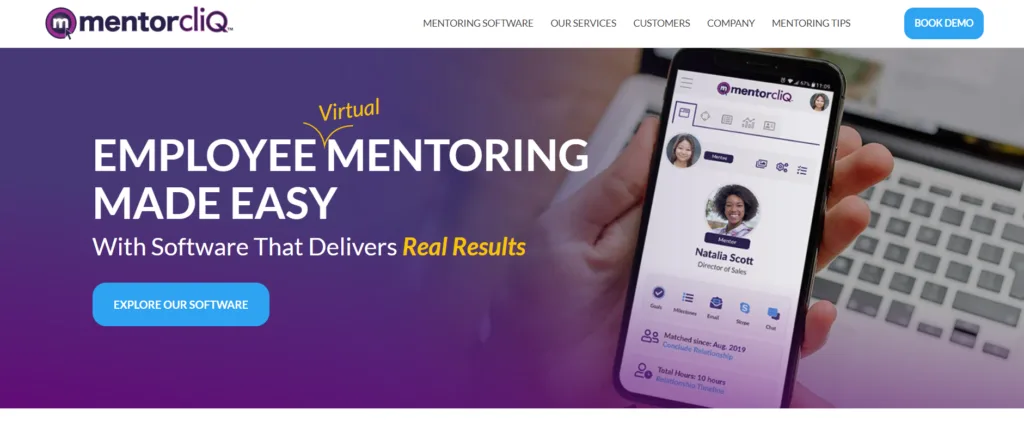
MentorcliQ offers an industry-leading people development platform that complements any HRIS. Organizations use MentorcliQ to connect employees through structured mentoring, ERG programs, and development pathways. The platform integrates with major HR systems to reduce administrative work and promote measurable learning and inclusion outcomes. Its analytics give HR leaders real-time visibility into participation, engagement, and program impact across the organization.
Key Features:
- Automated Matching: Creates high-quality mentor–mentee matches at scale using configurable criteria.
- Program Management Tools: Reduces administrative time by tracking enrollment, milestones, and communication in one place.
- Impact Analytics: Measures retention, engagement, and participant outcomes to demonstrate program ROI.
Best for: Large and mid-sized organizations seeking structured mentoring, ERG support, and development programs that integrate with their HRIS.
2. Workday
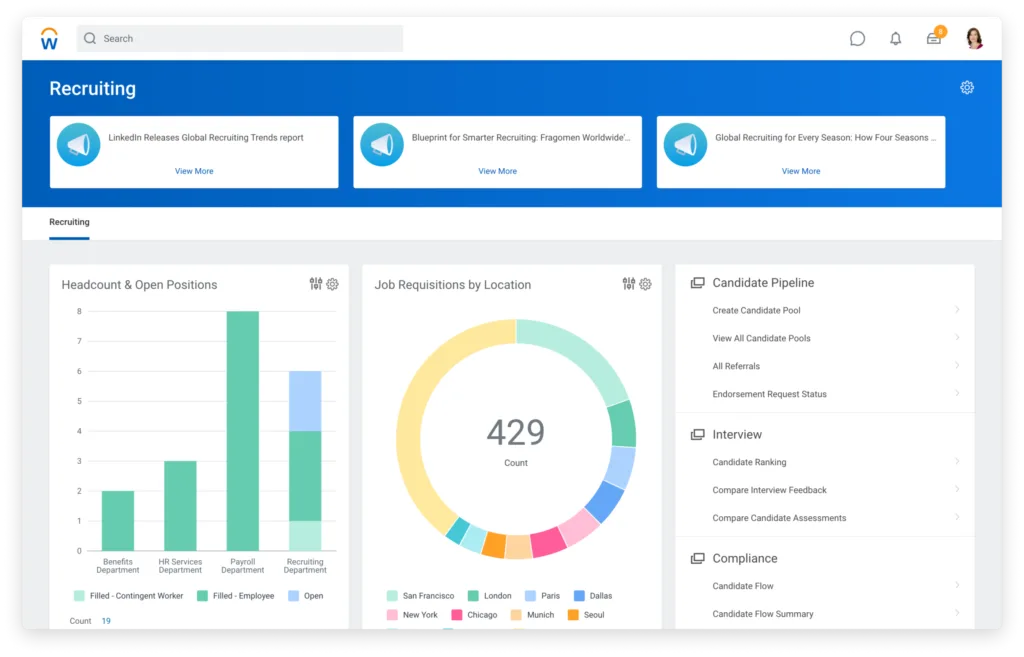
Workday is a comprehensive HCM platform that includes HRIS, payroll, talent management, and financial tools. Its unified system provides workforce data in real time and supports global organizations with complex needs. Workday’s automation features streamline HR workflows, while its analytics tools help leaders plan and forecast.
Key Features:
- Unified HCM System: Centralizes HR, payroll, and financial data.
- Global Compliance Tools: Supports multi-country regulations and tax rules.
- Advanced Workforce Analytics: Helps leaders model and plan organizational changes.
Best for: Large enterprises needing a broad, integrated HCM suite.
3. UKG
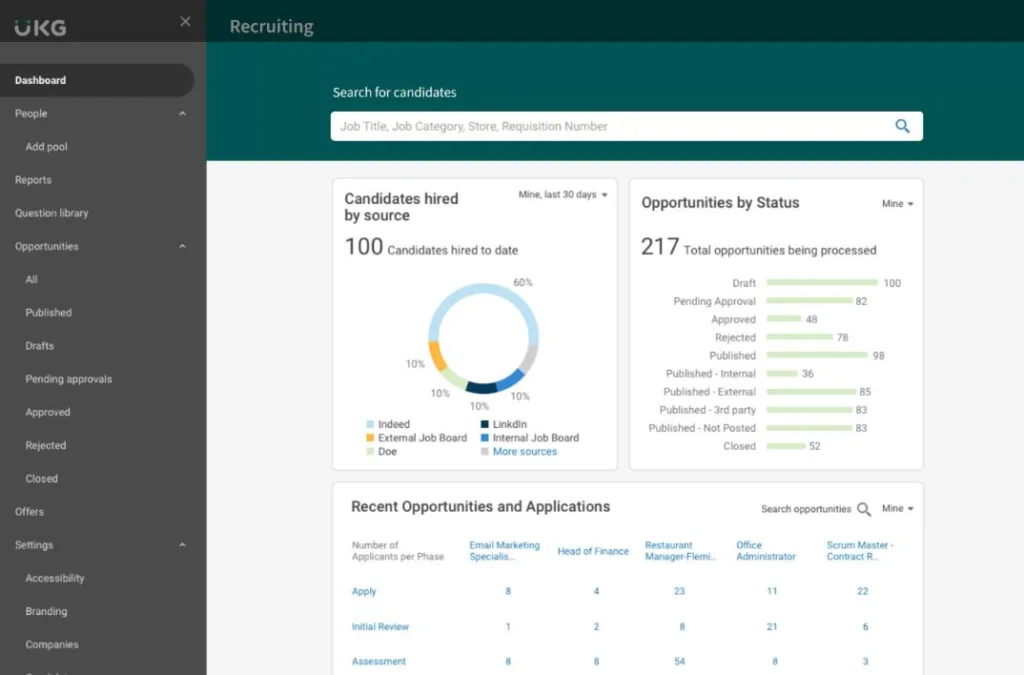
UKG offers HR, payroll, and talent tools designed for organizations with diverse workforce types. Its focus on people insights helps HR teams strengthen employee experience while maintaining operational efficiency. UKG’s service model supports complex compliance and employee lifecycle workflows.
Key Features:
- Configurable HR Workflows: Adapts processes to organizational policies.
- Payroll Engine: Handles complex pay rules and multi-jurisdiction tax needs.
- Employee Experience Surveys: Collects feedback to support engagement strategies.
Best for: Organizations that need customizable processes and strong compliance support.
4. BambooHR
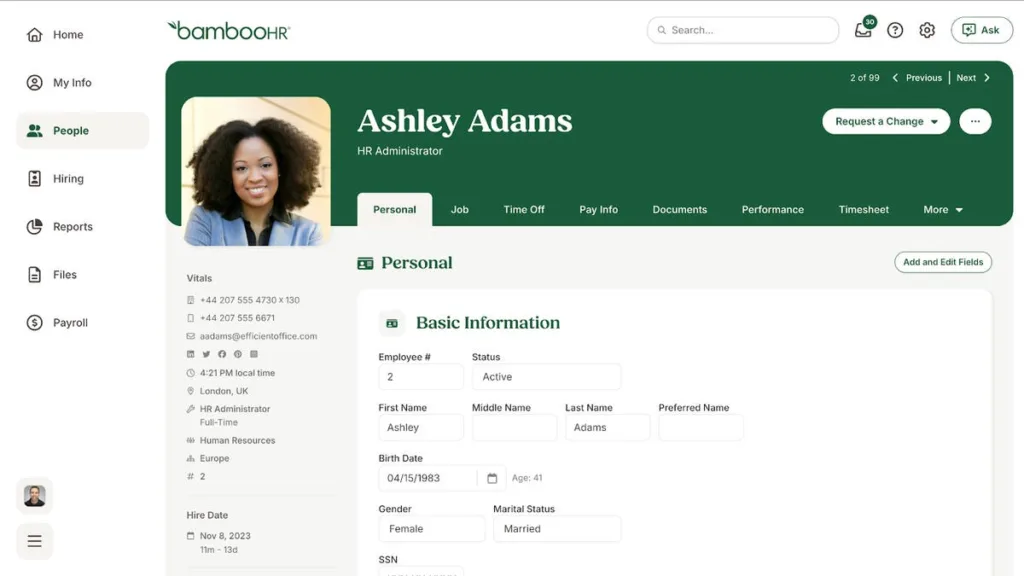
BambooHR provides a streamlined HRIS platform for small and mid-sized organizations. Its interface simplifies hiring, onboarding, data management, and performance workflows. HR teams use BambooHR to coordinate essential HR tasks without heavy configuration.
Key Features:
- Applicant Tracking: Manages hiring steps in one system.
- Employee Records Hub: Organizes data and documents securely.
- Performance Tools: Supports check-ins and feedback cycles.
Best for: Small and mid-sized organizations seeking an easy-to-use HR system.
5. Deel
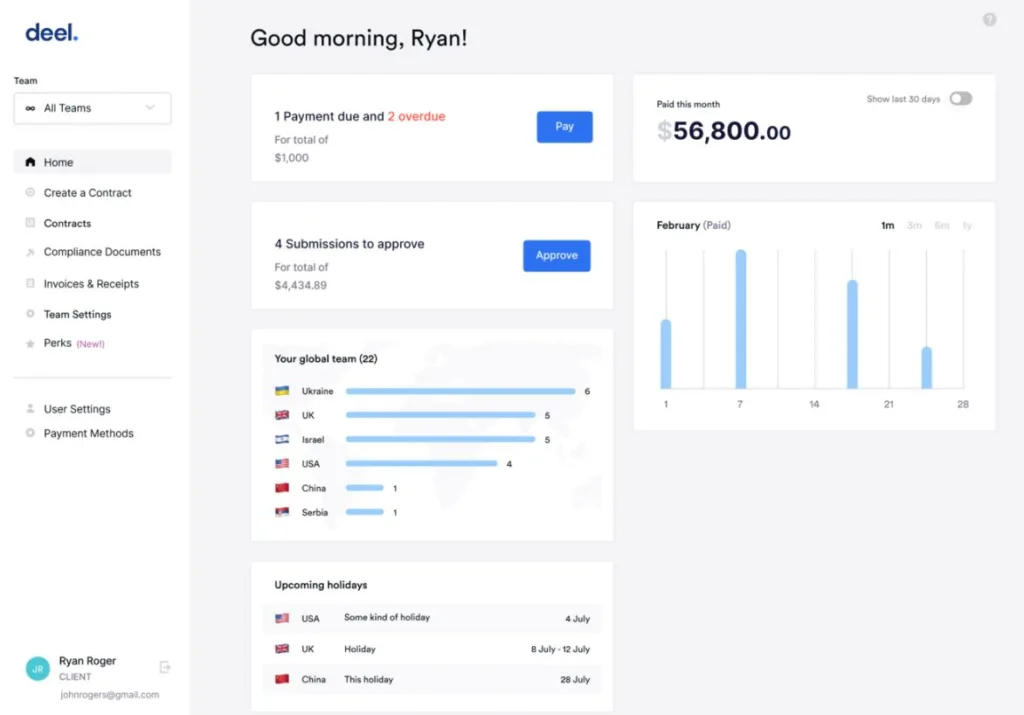
Deel specializes in global HR operations. It offers contractor management, payroll, and compliance tools to support distributed teams. Companies use Deel to hire internationally without establishing local entities.
Key Features:
- Global Hiring Tools: Manages employment in 100+ countries.
- Localized Payroll: Handles tax, benefits, and regulations for global workers.
- Document Management: Generates compliant contracts quickly.
Best for: Organizations with global or remote-first teams.
6. HiBob
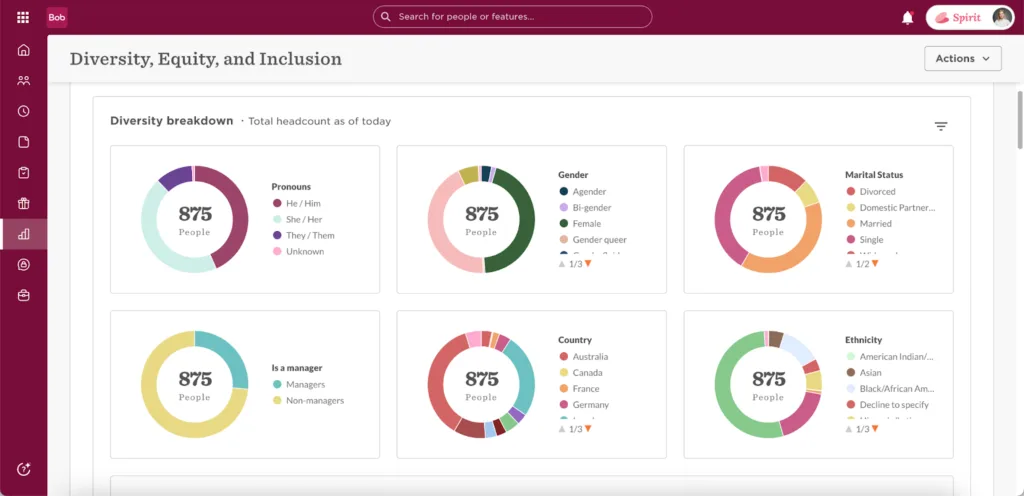
HiBob delivers an HR platform designed for modern, high-growth companies. Its tools support performance, onboarding, and workforce engagement. HiBob emphasizes transparency and collaboration across teams.
Key Features:
- People Analytics: Highlights trends in engagement and retention.
- Performance Cycles: Supports structured review processes.
- Onboarding Journeys: Coordinates tasks across departments.
Best for: Growth-stage companies that need structure and workforce visibility.
7. Paylocity
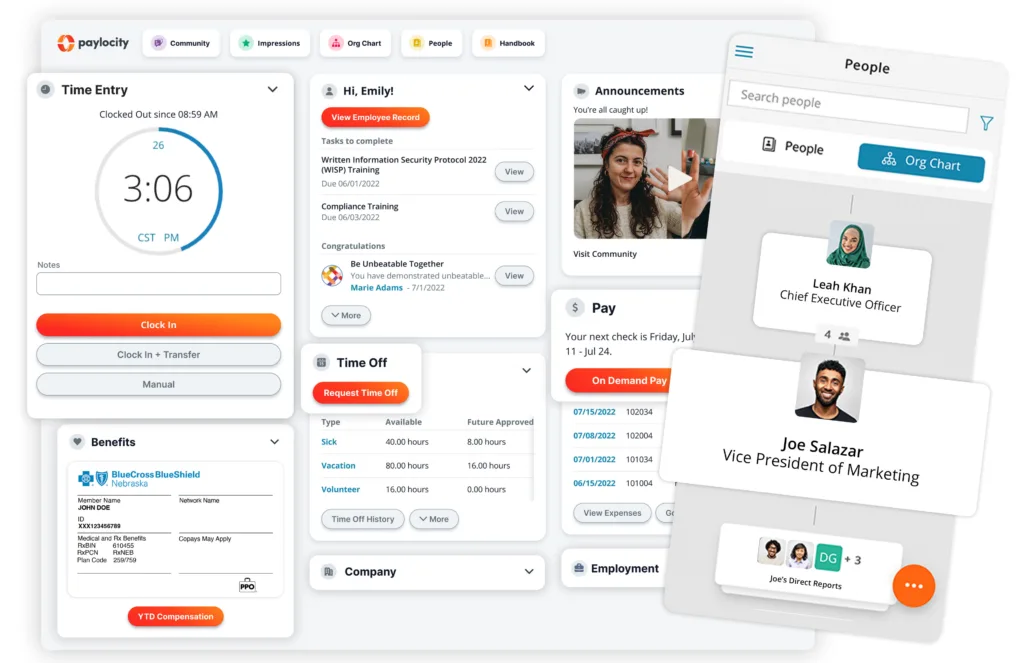
Paylocity provides HR and payroll tools with strong options for workforce communication and engagement. HR teams use Paylocity to manage data, streamline payroll, and maintain compliance.
Key Features:
- Payroll Automation: Reduces manual processing steps.
- Compliance Monitoring: Tracks federal and state changes.
- Employee Communication Tools: Supports messaging and collaboration.
Best for: Organizations seeking HRIS tools combined with communication features.
8. Rippling
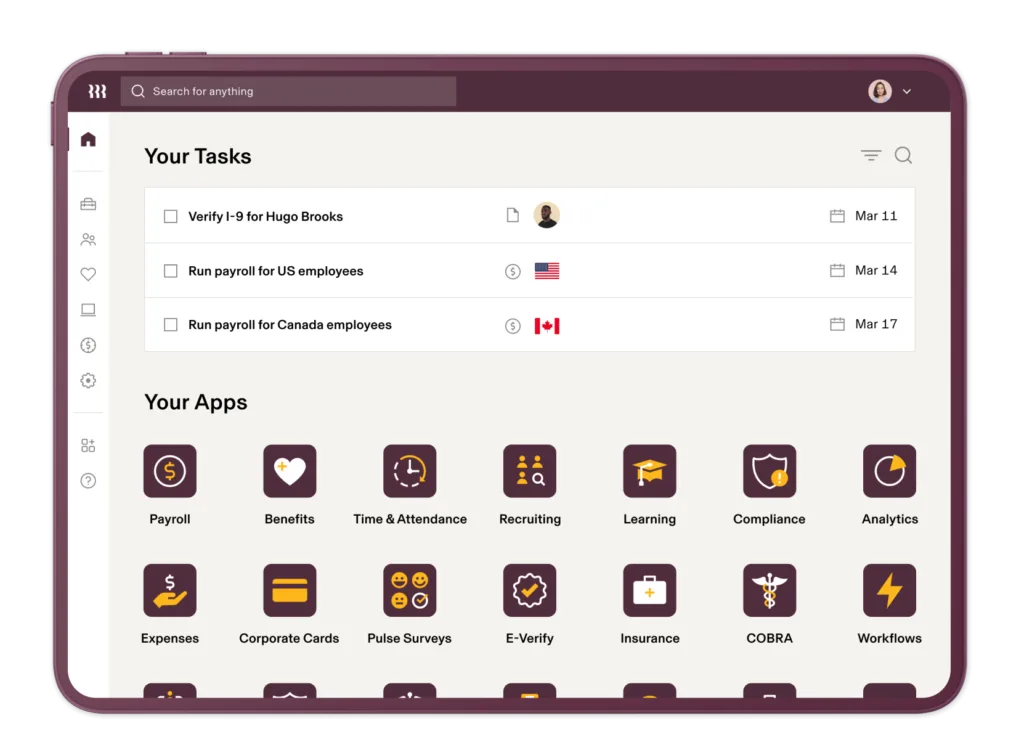
Rippling integrates HR, IT, and finance operations in one platform. Its unified approach automates onboarding, payroll, device management, and access permissions. HR teams use Rippling for fast, system-wide administration.
Key Features:
- Unified Admin Controls: Manages apps, devices, and permissions.
- Automated Onboarding: Sets up payroll, benefits, and IT access.
- Global Payroll Options: Supports distributed teams.
Best for: Organizations wanting a single system for HR and IT operations.
9. Dayforce
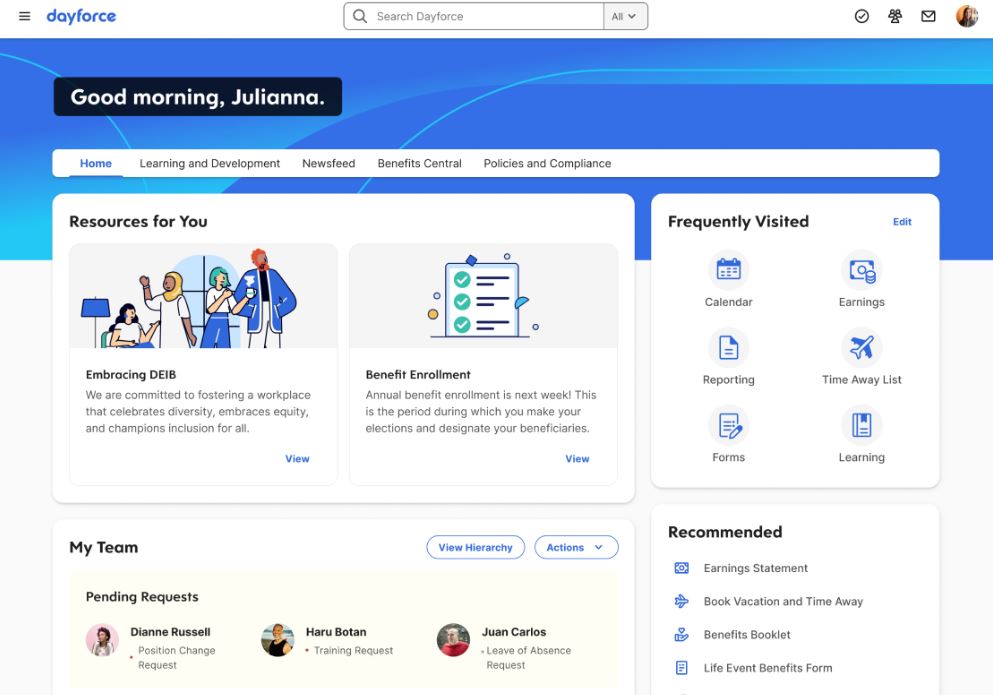
Dayforce is an enterprise HRIS with strong payroll and workforce management capabilities. Its continuous calculation engine supports accurate pay and labor insights. Organizations with complex scheduling needs often adopt Dayforce.
Key Features:
- Real-Time Payroll Calculations: Updates pay continuously.
- Workforce Management Tools: Supports scheduling and labor planning.
- Compliance Features: Helps manage employment regulations.
Best for: Organizations with advanced payroll and scheduling requirements.
10. Namely
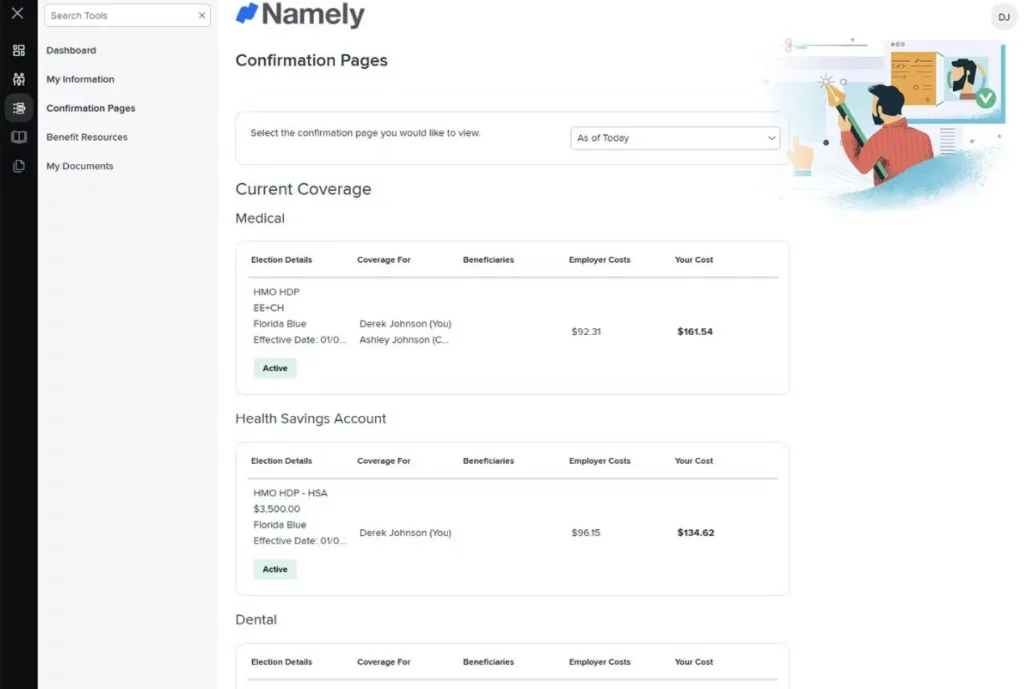
Namely provides HRIS and payroll features designed for mid-sized companies. Its user interface simplifies HR processes and offers employees consistent self-service tools.
Key Features:
- HR and Payroll Integration: Reduces data entry and errors.
- Benefits Administration: Coordinates enrollment and eligibility.
- People Analytics: Provides insights on workforce trends.
Best for: Mid-sized organizations seeking a user-friendly HR system.
Benefits of HRIS Software
HRIS software can deliver a wide range of benefits to help HR professionals operate more efficiently and strategically.
Increase Operational Efficiency
HRIS software removes manual data entry and repetitive administrative steps. HR teams use these platforms to manage core workflows with accuracy and speed. Workforce data stays consistent across payroll, benefits, and reporting. This supports a stable infrastructure for employee programs and frees HR teams to focus on strategic work, including mentoring and career development.
Improve Employee Experience
Self-service tools reduce friction. Employees gain access to their information, request changes, and complete tasks without delays. Managers get clear visibility to support performance and development conversations. These features help organizations maintain a more responsive and equitable employee experience.
Strengthen Compliance
HRIS platforms maintain accurate records, track regulatory updates, and automate key compliance tasks. This helps reduce risk and supports standardized practices across teams and locations. HR leaders gain confidence in their reporting and documentation processes.
Support Workforce Planning
Analytics tools highlight patterns in turnover, hiring, pay, and performance. Leaders use these insights to plan talent strategies, budget effectively, and track progress toward organizational goals. When combined with development tools, HR teams gain a fuller picture of workforce needs.
Building a Strong HR Infrastructure
HRIS software gives organizations the structure to support employees at scale. With consistent data, automated workflows, and reliable reporting, HR teams can focus on development, culture-building, and inclusion efforts. A strong HRIS also pairs well with platforms like MentorcliQ that support mentoring and ERGs, expanding your organization’s capacity for growth and retention.
Book a demo with MentorcliQ to learn how your organization can build stronger, scalable mentoring programs.
Modal