
Top 9 Internal Talent Marketplace Platforms for Workforce Mobility and Growth

WHAT’S INSIDE
I want CliQ Updates!
Organizations face pressure to fill roles faster while keeping employees engaged and progressing. An internal talent marketplace supports this by connecting people to projects, mentors, stretch roles, and career paths inside the company. When done well, it reduces external hiring costs and supports retention and employee career development.
As work becomes skills-based, employees expect visibility into opportunities that match their goals. Research from MentorcliQ shows employees with access to structured development are significantly more likely to stay and report higher engagement. Internal talent marketplaces bring structure and scale to that expectation, especially when paired with mentoring and career conversations.
What Is an Internal Talent Marketplace?
An internal talent marketplace is a digital platform that matches employees to internal opportunities based on skills, interests, and career goals. Opportunities may include short-term projects, open roles, mentoring, gigs, or learning experiences.
These platforms give leaders insight into available skills while giving employees clarity on how to grow without leaving the organization. When integrated with mentoring and development programs, they support workforce planning, internal mobility, and inclusion.
Key Features of Internal Talent Marketplace You Should Look For
Internal talent marketplaces vary widely in focus and maturity. The features below help determine if a platform will support long-term workforce development rather than simple job matching.
Skills-Based Matching
Skills-based matching connects employees to opportunities using demonstrated skills, aspirations, and experience. This moves organizations beyond job titles and supports fair access to growth.
Career Path Visibility
Career path tools show employees how roles, projects, and mentoring experiences connect over time. This supports informed career conversations between employees and managers.
Mentoring and Development Integration
Integration with mentoring programs allows employees to build skills through guided relationships. This strengthens readiness for internal moves and supports diverse talent pipelines.
Manager and HR Insights
Analytics and dashboards help HR and leaders understand skill gaps, participation, and mobility trends. This supports workforce planning and targeted development investments.
Scalable Administration
Strong platforms reduce manual effort through automation, reporting, and governance controls. This allows programs to grow without increasing administrative load.
9 Best Internal Talent Marketplace Platforms for Workforce Mobility and Growth
1. MentorcliQ

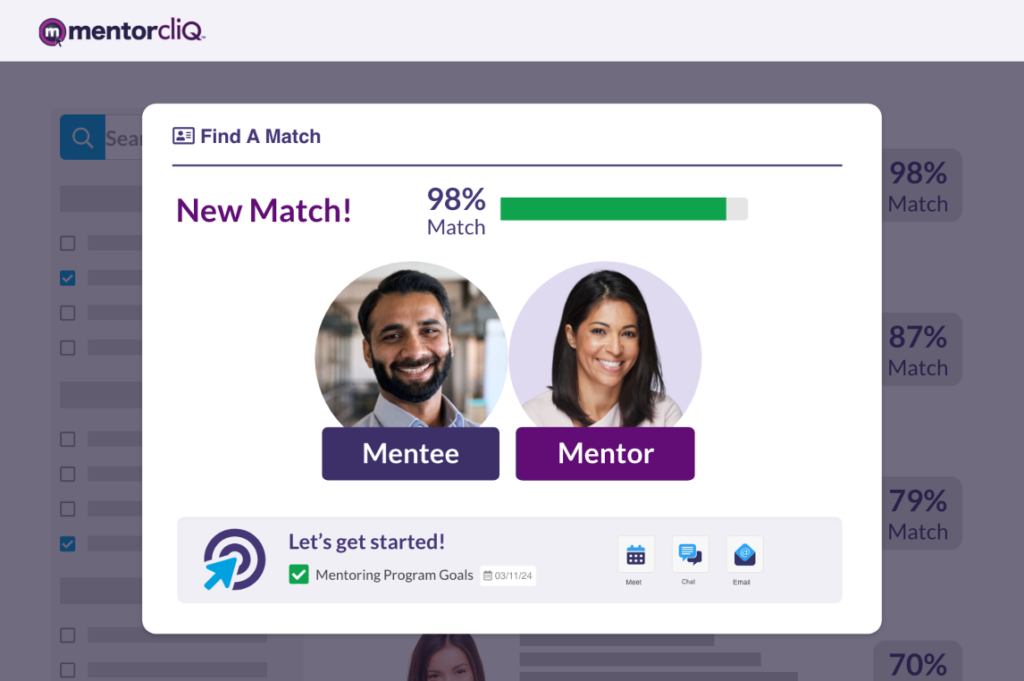
MentorcliQ offers an industry-leading approach by combining internal talent mobility with structured mentoring and career development. Rather than focusing only on gigs or roles, MentorcliQ connects employees to mentors, projects, and growth experiences that build skills over time.
The platform supports skills-based matching, measurable outcomes, and enterprise governance. HR teams gain visibility into participation and impact, while employees gain clear pathways for growth. MentorcliQ is trusted by global enterprises to support internal mobility, inclusion, and retention at scale.
Key Features:
- Mentoring-Centered Talent Matching: Links employees to mentors and development experiences aligned to skills and goals.
- Robust Analytics: Tracks engagement, outcomes, and mobility impact across programs.
- Scalable Program Management: Automates matching, reporting, and governance for enterprise use.
Best for: Organizations prioritizing internal mobility through mentoring and long-term development.
Watch the free 4-minute MentorcliQ
Demo Video right here
2. Gloat

Gloat focuses on AI-driven talent matching for internal roles and projects. It emphasizes skills inference and workforce agility.
Key Features:
- AI Skills Mapping: Identifies skills across the workforce to match talent to opportunities.
- Project and Gig Marketplace: Supports short-term internal assignments.
- Workforce Planning Insights: Provides visibility into skill supply and demand.
Best for: Enterprises focused on skills-based workforce planning.
3. Fuel50

Fuel50 centers on career pathing and employee-driven development. It emphasizes transparency in career options.
Key Features:
- Career Path Frameworks: Shows lateral and upward role movement.
- Skills and Aspiration Mapping: Aligns employee goals with business needs.
- Manager Career Tools: Supports structured development discussions.
Best for: Organizations emphasizing career clarity and internal movement.
4. Eightfold AI

Eightfold AI uses deep learning to support talent intelligence across hiring and internal mobility.
Key Features:
- Advanced Skills Intelligence: Infers skills from experience and data.
- Internal Opportunity Matching: Connects employees to roles and projects.
- Diversity Analytics: Highlights representation across talent flows.
Best for: Large enterprises seeking AI-driven talent insights.
5. Workday Talent Marketplace

Workday’s solution integrates internal opportunities within its HCM ecosystem.
Key Features:
- Native Workday Integration: Connects seamlessly with employee data.
- Opportunity Visibility: Highlights projects and short-term work.
- Manager Oversight: Supports approval workflows.
Best for: Existing Workday customers.
6. SAP SuccessFactors

SAP’s platform supports internal gigs and skills development within SuccessFactors.
Key Features:
- Skills Framework Integration: Uses SAP skills architecture.
- Internal Projects: Encourages short-term development experiences.
- Enterprise Controls: Fits regulated environments.
Best for: Organizations running SAP SuccessFactors.
7. Phenom

Phenom extends its talent experience platform into internal mobility.
Key Features:
- Talent Experience Layer: Supports internal career discovery.
- AI Matching: Connects employees to opportunities.
- Unified Talent Data: Links hiring and mobility insights.
Best for: Companies focused on talent experience consistency.
8. Beamery

Beamery supports talent lifecycle management with internal mobility capabilities.
Key Features:
- Skills and Talent CRM: Tracks employee capabilities over time.
- Internal Opportunity Visibility: Supports movement planning.
- Analytics and Insights: Informs workforce decisions.
Best for: Organizations aligning internal and external talent strategies.
9. Degreed

Degreed connects learning with internal opportunities.
Key Features:
- Learning-to-Opportunity Links: Connects skills development to gigs.
- Skills Taxonomy: Supports skill tracking across learning content.
- Employee Self-Discovery: Encourages proactive growth.
Best for: Learning-driven talent strategies.
Benefits of Internal Talent Marketplace Platforms
Internal talent marketplaces increase retention and agility by making skills, opportunities, and career pathways visible, while promoting fair access to growth and better use of existing talent.
Improved Retention and Engagement
When employees see clear growth options, they are more likely to stay and participate. Internal marketplaces support ongoing career conversations and development access.
Stronger Workforce Agility
Skills-based matching allows organizations to redeploy talent quickly as needs change. This supports faster response to business priorities.
Increased Equity in Opportunity Access
Transparent opportunity visibility reduces reliance on informal networks. This supports inclusion and fair access to growth.
Better Use of Existing Skills
Internal marketplaces reveal hidden skills already in the organization. This reduces external hiring costs and supports internal progression.
Choosing the Right Internal Talent Marketplace
For HR and talent leaders, the right platform supports mobility without adding administrative burden. Look for solutions that integrate mentoring, skills development, and analytics rather than focusing only on short-term gigs.
MentorcliQ stands out by linking internal mobility to structured mentoring and measurable outcomes. This approach supports sustainable growth, stronger pipelines, and long-term retention.
Book a Demo with MentorcliQ to learn how your organization can build stronger, scalable mentoring programs.
Modal