
Top 10 eLearning Platforms for Scalable Employee Development
WHAT’S INSIDE
I want CliQ Updates!
Leaders face constant pressure to upskill employees while keeping costs controlled and learning accessible. Strong eLearning platforms help you support learning at scale, build equitable access to development, and align people growth with business outcomes.
Mentoring data reinforces this. MentorcliQ’s Mentoring Impact Report shows that employees in structured training programs advance at a higher rate and stay longer, which strengthens the impact of learning ecosystems when mentoring and eLearning work together.
eLearning platforms offer centralized learning delivery, skill development pathways, and actionable insights. When learning pairs with mentoring, employees gain guidance that turns knowledge into applied skill and measurable performance improvement.
What Is eLearning?
According to the Oxford Dictionary of Business and Management, eLearning is “learning conducted via electronic media, typically on the Internet.”
In practice, eLearning platforms give users access to structured learning modules, assessments, and progress tracking to support ongoing skill development, all via online training courses.
Key Features of eLearning Platforms You Should Look For
Leaders need tools that scale, support diverse learners, and produce measurable outcomes to track learner progress and training effectiveness. These features help you build structured learning ecosystems that pair well with mentoring, ERGs, and internal mobility programs.
Learning Paths
Learning paths organize content into structured sequences. They help employees follow clear development routes and reduce administrative work for HR and L&D teams.
Analytics and Reporting
Analytics allow you to track course progress, skill attainment, engagement levels, and learning outcomes. Strong reporting also supports ROI conversations with senior leaders.
Content Authoring
Authoring tools help you create or update courses quickly. This supports agile learning practices and reduces reliance on outside vendors.
Mobile Learning
Mobile access supports equitable participation across locations, shifts, and roles. It also meets the expectations of a distributed workforce.
Integrations
Integrations with HRIS, LMS, mentoring, and communication tools streamline user access and system sync. They also reduce the administrative load on HR and IT teams.
10 Best eLearning Platforms for Scalable Employee Development
1. MentorcliQ
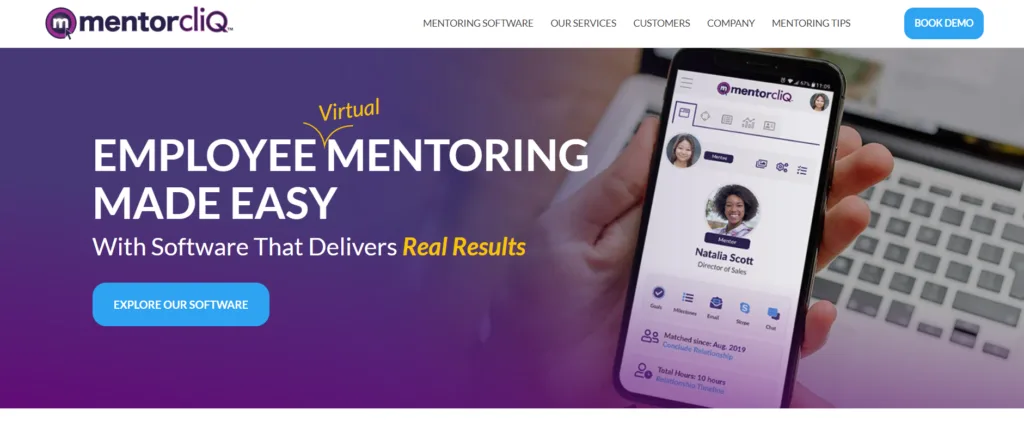
MentorcliQ offers an industry-leading platform that integrates structured learning with guided mentoring. Its matching algorithms, program automation, and robust analytics help HR leaders scale learning programs with limited administrative burden. MentorcliQ supports formal and informal learning pathways, career conversations, and ERG-driven development, helping organizations build cultures of continuous learning.
Key Features:
- Guided Learning Paths: Connects learning modules with mentoring activities to drive application and retention.
- Automated Matching: Reduces manual work and enables high-quality mentor–mentee pairing.
- Comprehensive Reporting: Tracks outcomes across participation, skill growth, and retention.
Best for: Enterprises seeking to combine eLearning with structured mentoring for measurable people-development impact.
2. Docebo
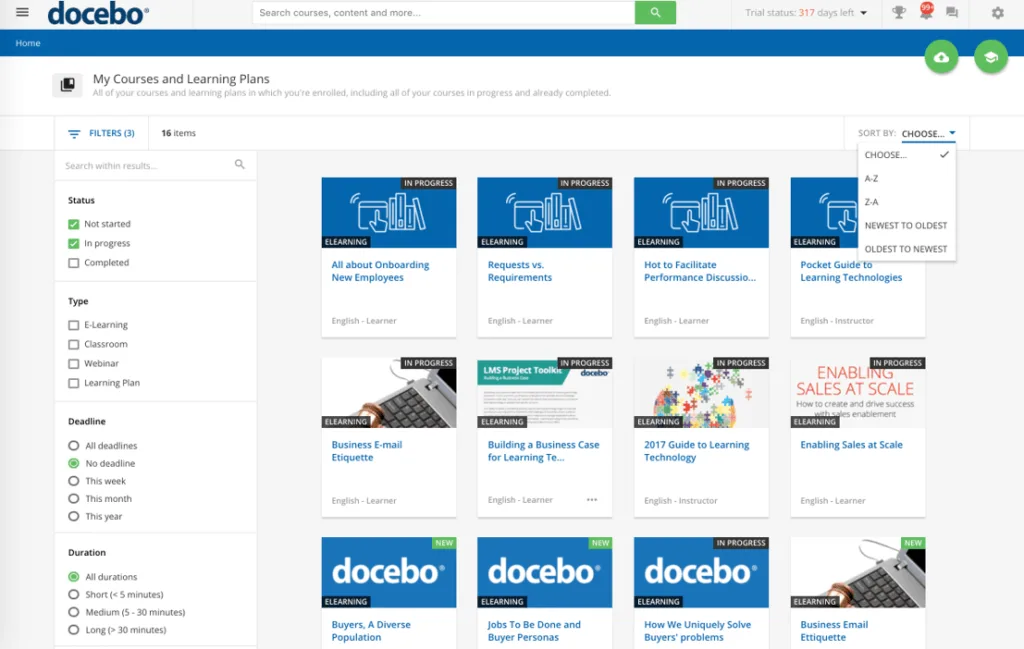
Docebo is a cloud-based LMS with strong AI-driven recommendations and scalable learning workflows. It supports structured paths and external training use cases.
Key Features:
- AI Recommendations: Suggests relevant content based on user activity.
- Multi-Audience Management: Supports internal and external learners.
- Content Marketplace: Provides ready-to-use learning modules.
Best for: Organizations that need a flexible, AI-supported LMS.
3. Cornerstone OnDemand
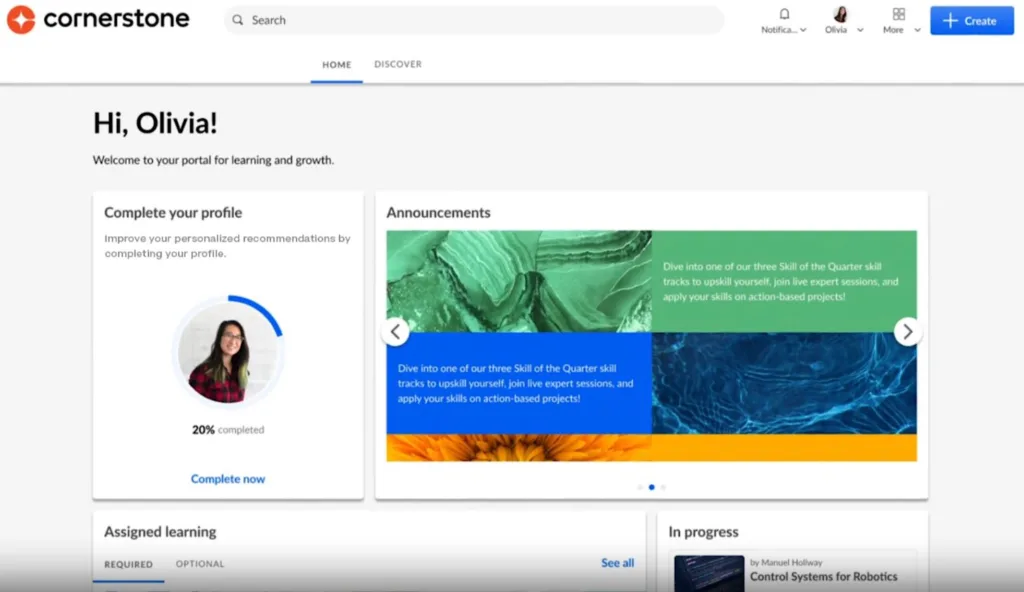
Cornerstone delivers enterprise learning with performance and skill management capabilities. Its tools help centralize talent development.
Key Features:
- Skills Mapping: Links learning to role-based competencies.
- Strong Compliance Tools: Supports regulatory training.
- Integrated Talent Suite: Connects learning with performance workflows.
Best for: Large organizations seeking one unified talent platform.
4. Moodle
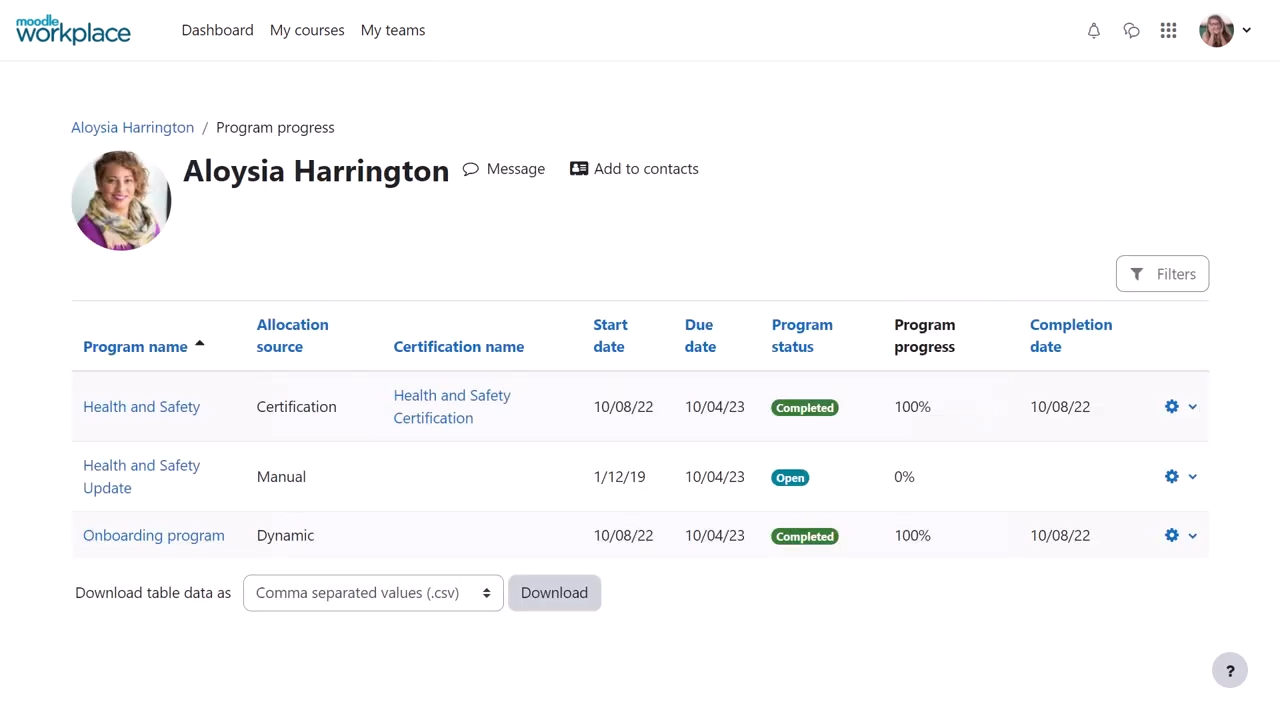
Moodle is an open-source LMS with strong customization options. It supports education and corporate training environments.
Key Features:
- Plugin Library: Expands functionality across learning and assessment.
- Flexible Course Design: Customizable structures to fit varied needs.
- Community Support: Large user base contributing enhancements.
Best for: Teams with technical resources that want open-source flexibility.
5. TalentLMS
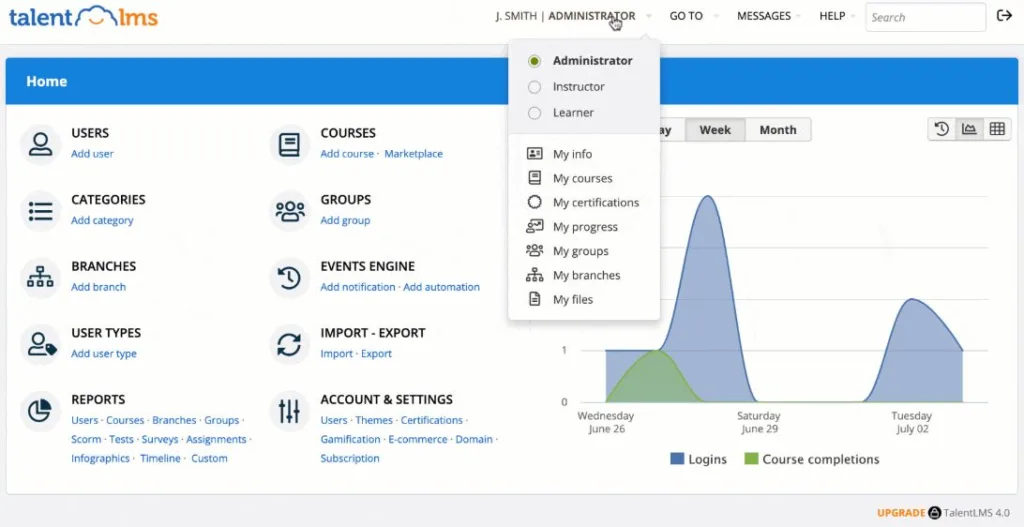
TalentLMS offers simple configuration and fast deployment for smaller teams or growing organizations. Its interface supports quick adoption across departments.
Key Features:
- Quick Setup: Short implementation times.
- Gamification Elements: Supports motivation and engagement.
- SCORM and xAPI Support: Ensures content compatibility.
Best for: Mid-size companies needing a straightforward LMS.
6. Absorb LMS
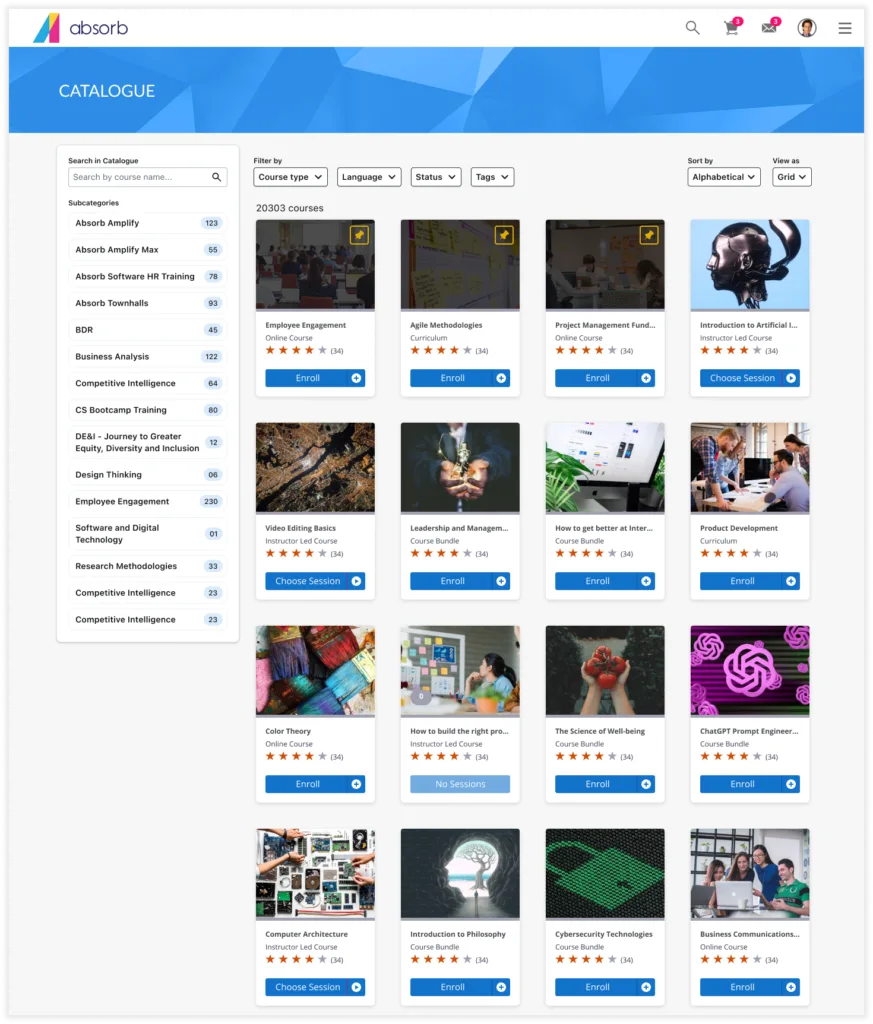
Absorb LMS provides a modern interface designed for scalability and strong reporting capabilities. It supports enterprise learning needs with flexible administrative tools.
Key Features:
- Smart Administration: Automation options reduce manual tasks.
- Advanced Reporting: Detailed dashboards for leadership.
- eCommerce Support: Enables selling training externally.
Best for: Organizations offering internal and commercial training.
7. SAP Litmos
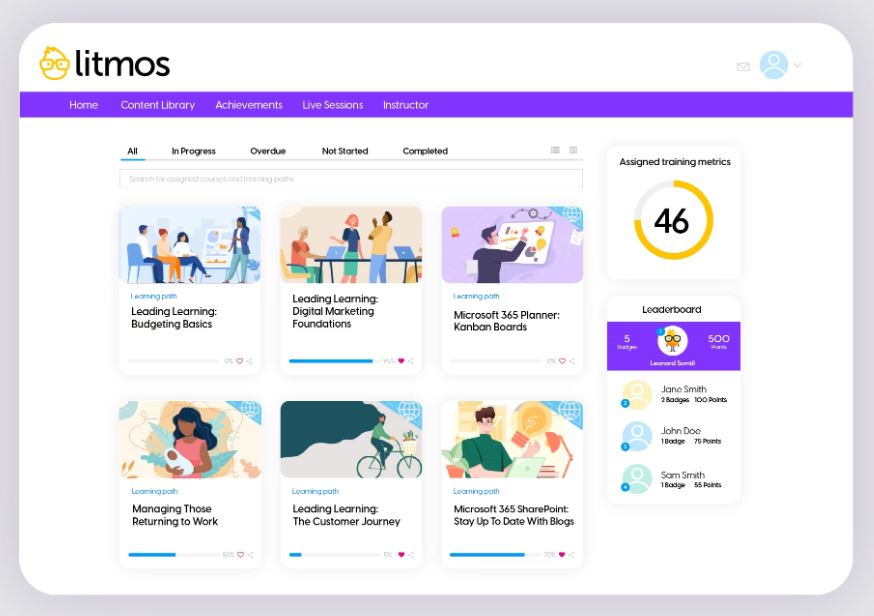
SAP Litmos delivers rapid implementation and mobile-ready training delivery. Its built-in content library allows teams to launch learning initiatives quickly.
Key Features:
- Built-In Content Library: Ready-made compliance and soft-skill courses.
- Mobile Access: Strong support for remote workforces.
- API Library: Flexible integration options.
Best for: Companies needing rapid deployment and broad content.
8. LearnUpon
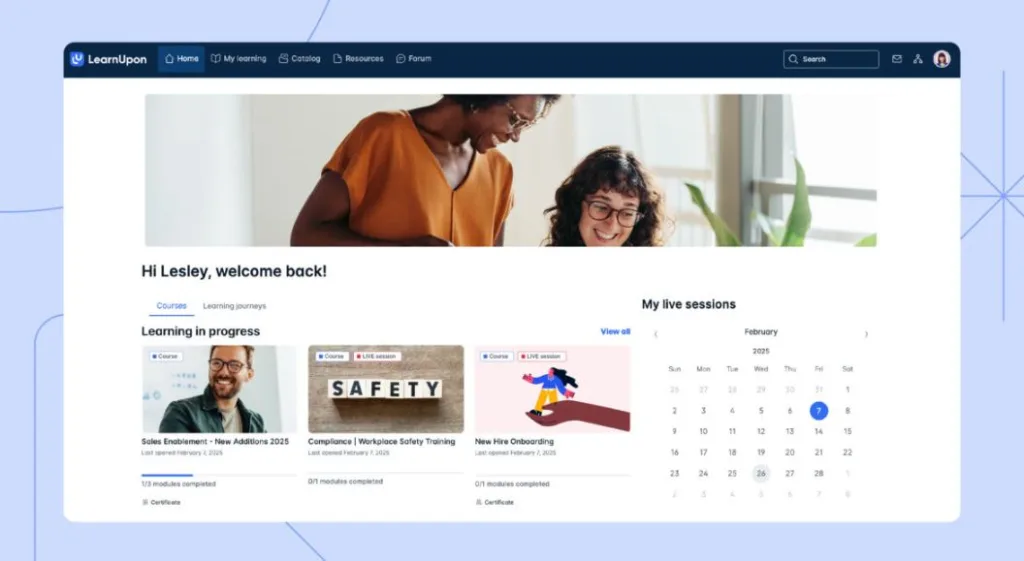
LearnUpon focuses on blended learning experiences and global scalability. Its multi-portal approach helps organizations manage diverse learner groups.
Key Features:
- Portal-Based Structure: Manages multiple learner groups.
- Blended Learning Support: Combines digital and instructor-led training.
- Robust Integrations: Connects to HR and communication systems.
Best for: Distributed teams with varied learning formats.
9. SC Training (formerly EdApp)
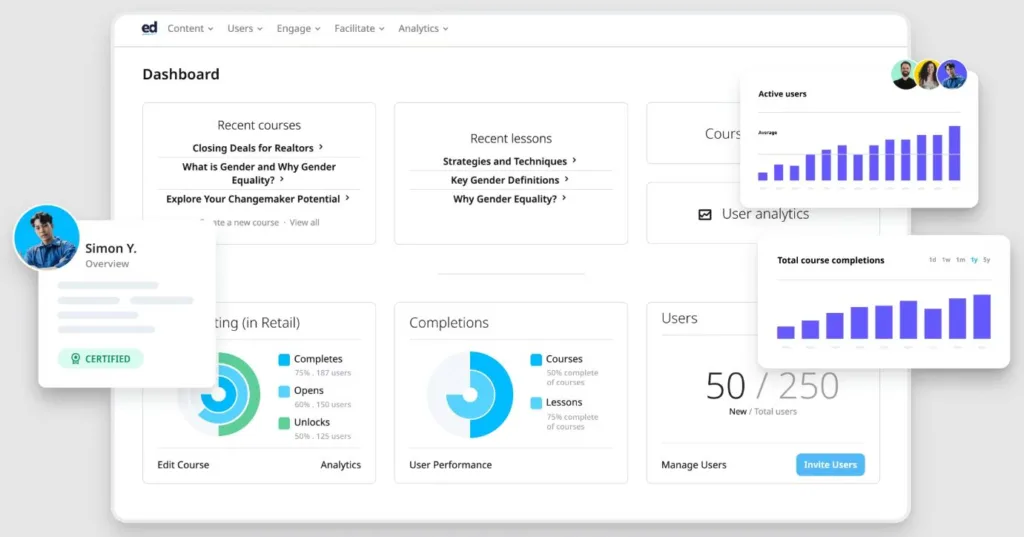
SC Training emphasizes mobile-first microlearning with fast, intuitive course creation. It supports frontline and distributed teams with short, practical lessons.
Key Features:
- Microlesson Authoring: Creates short, digestible modules.
- Mobile Delivery: Designed for frontline and shift-based workers.
- Template Library: Reduces course creation time.
Best for: Teams that need mobile-first microlearning.
10. Anthology
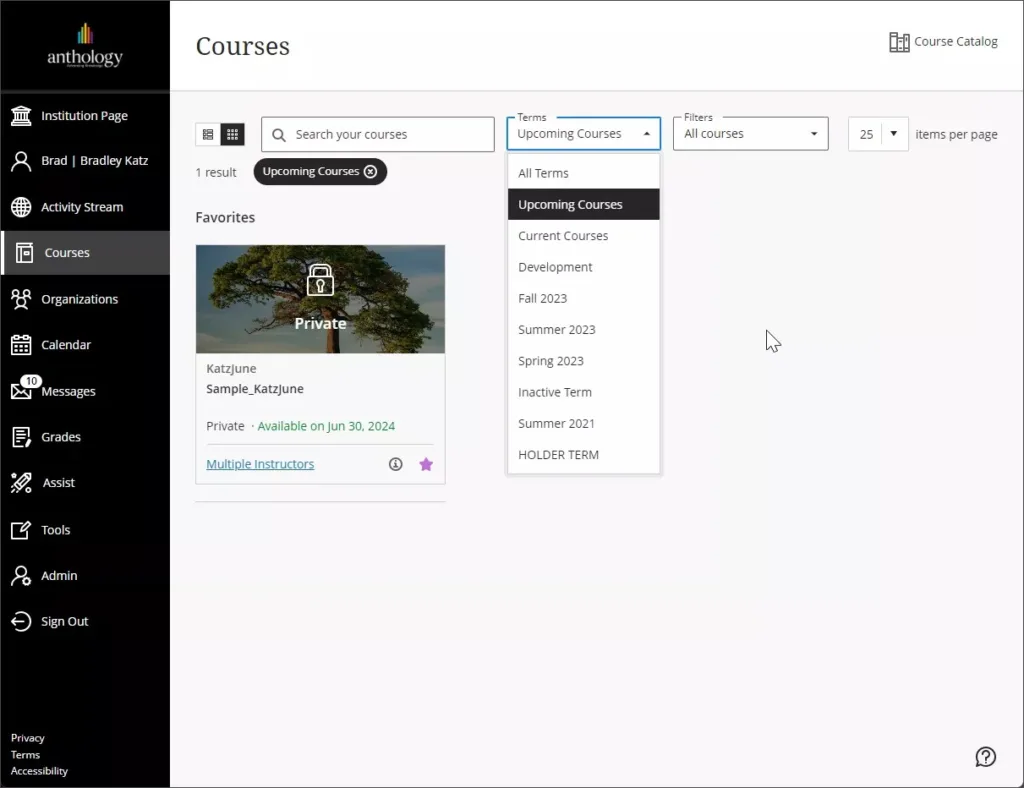
Anthology supports structured digital courses widely used in academic and corporate environments. Its assessment and classroom tools enable comprehensive learning workflows.
Key Features:
- Virtual Classroom Tools: Supports live sessions.
- Assessment Features: Offers detailed testing and analytics.
- Content Management: Organizes large libraries.
Best for: Organizations needing structured courses with academic-style tools.
Benefits of eLearning Platforms
Modern eLearning platforms give leaders a scalable, data-driven way to build skills, support growth, and ensure equitable access to development across the organization.
Scalable Learning Delivery
eLearning platforms help leaders deliver consistent learning to large and distributed workforces. This supports onboarding, upskilling, and ongoing development without heavy administrative load.
Actionable Skills Development
Structured courses and paths help employees build relevant skills linked to organizational priorities. Leaders gain visibility into progress and competency gaps and can build out personalized learning paths.
Data-Driven Decisions
Analytics offer insight into participation, skill growth, and learning outcomes. Leaders can use this data to align learning programs with performance and retention goals.
Equitable Access To Development
Mobile and asynchronous access expands participation across roles, schedules, and locations. This strengthens inclusion and gives all employees opportunities to grow.
Building a Strong Learning Culture
eLearning is a core component of modern development strategies. When paired with mentoring, ERGs, structured learning pathways, and online learning platforms, it deepens engagement and accelerates skill application.
Leaders who invest in flexible digital learning create measurable improvements in performance and retention.
Book a Demo with MentorcliQ to learn how your organization can build stronger, scalable mentoring programs.
Modal