
Top 12 Performance Management Software for Driving Organizational Growth
WHAT’S INSIDE
I want CliQ Updates!
Leaders need systems that give people clear expectations and meaningful conversations about performance. Effective performance management supports employees as they build skills, contribute to goals, and prepare for future roles. When organizations invest in structured performance development, they see stronger retention and measurable productivity gains.
According to MentorcliQ’s Mentoring Impact Report, 90% of mentored employees report higher job satisfaction. This reinforces how ongoing development conversations—including those built into performance systems—support strong workplace cultures.
The platforms below help teams simplify evaluations, support development, and improve accountability.
What Is Performance Management Software?
Performance management software refers to digital tools that help managers and employees plan, track, assess, and discuss performance expectations and progress. Merriam–Webster defines performance as “the execution of an action,” which reflects how these systems support ongoing evaluation of work outcomes and behaviors. The software centralizes goals, feedback, and development activities so managers can hold consistent conversations that align employees with organizational priorities.
Key Features of Performance Management Software You Should Look For
Organizations adopt these systems to create structure and reduce administrative work. The features below help managers run consistent, fair processes that support development.
Goal Management
This feature provides a framework to create, track, and update goals. It aligns team goals with organizational priorities and gives employees clarity on expectations.
Continuous Feedback
This supports timely conversations between managers and employees. It helps people adjust performance throughout the year rather than only during annual reviews.
Skills and Competency Tracking
This gives teams a consistent way to assess behaviors and role competencies. It helps identify growth opportunities and informs talent development plans.
Performance Reviews
This organizes structured review cycles. It saves time for HR and managers by standardizing forms, reminders, and workflows.
Reporting and Analytics
This provides insights into performance trends. Leaders use these analytics to track progress, support fairness, and identify development needs across teams.
12 Best Performance Management Software for Driving Organizational Growth
1. MentorcliQ
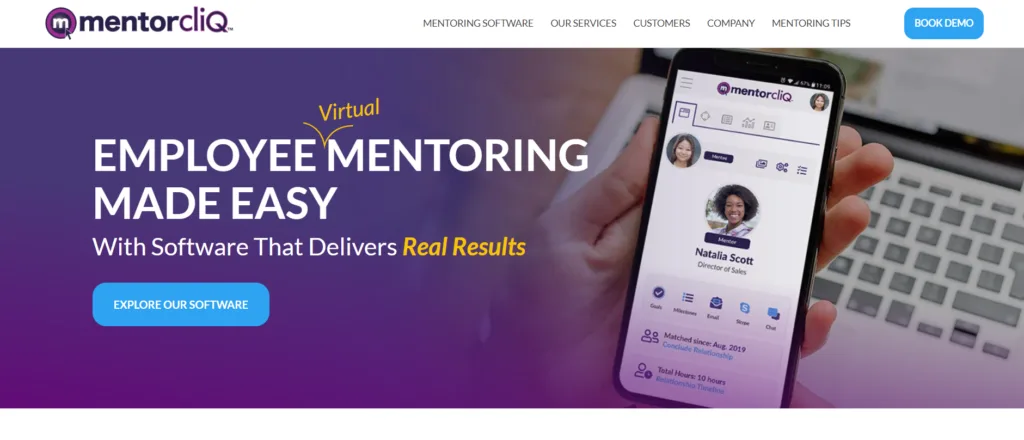
MentorcliQ is an industry-leading development platform that strengthens performance through structured mentoring and ERG support. Its systems reduce administrative work and give employees guided development pathways that complement performance goals. Organizations use MentorcliQ to build skills, prepare future leaders, and improve engagement outcomes across the entire talent lifecycle. Mentoring programs run automatically with matching, tracking, and data-rich reporting that connects development activity with measurable business results.
Key Features:
- Intelligent Matching: Matches mentors and mentees using skills, goals, and preferences to support targeted performance development.
- Program Automation: Reduces manual administration through streamlined enrollment, communication, and scheduling.
- Robust Analytics: Shows participation, progress, and business impact so leaders can connect development to performance outcomes.
Best for: Enterprises and mid-size organizations scaling development, performance, and ERG strategies.
2. Workday
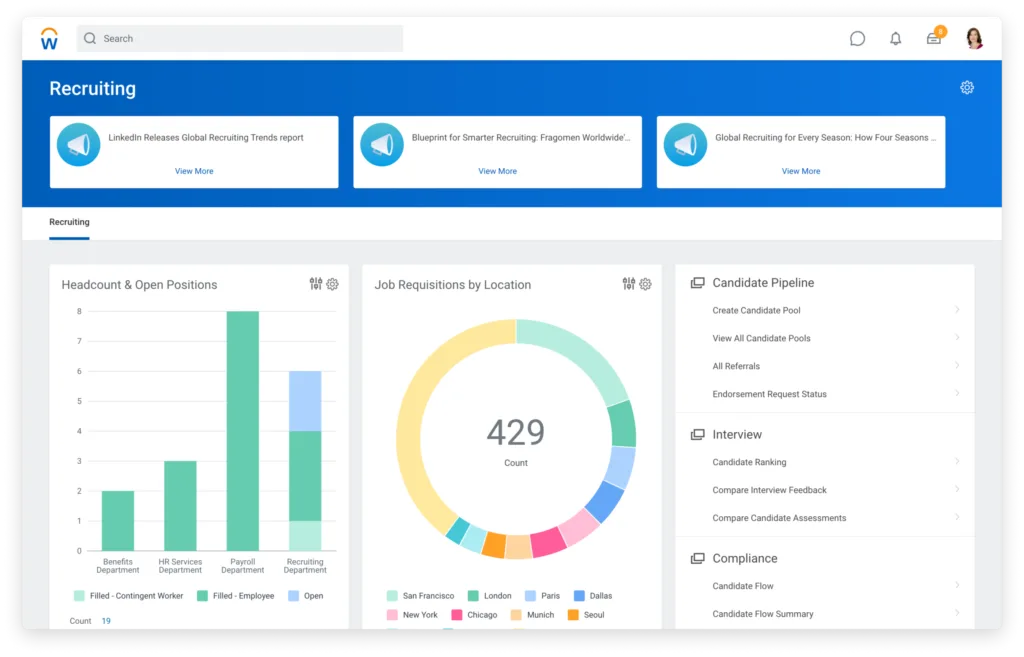
Workday offers performance tools within its broader HCM suite. The platform helps teams set goals, track outcomes, and complete structured reviews. Continuous feedback and talent data help managers support employees throughout the year.
Key Features:
- Goal Alignment: Connects individual goals to organizational priorities for clarity.
- Check-Ins: Facilitates ongoing performance conversations.
- Competency Models: Provides consistency in evaluating role-based expectations.
Best for: Large organizations with Workday HCM.
3. Lattice
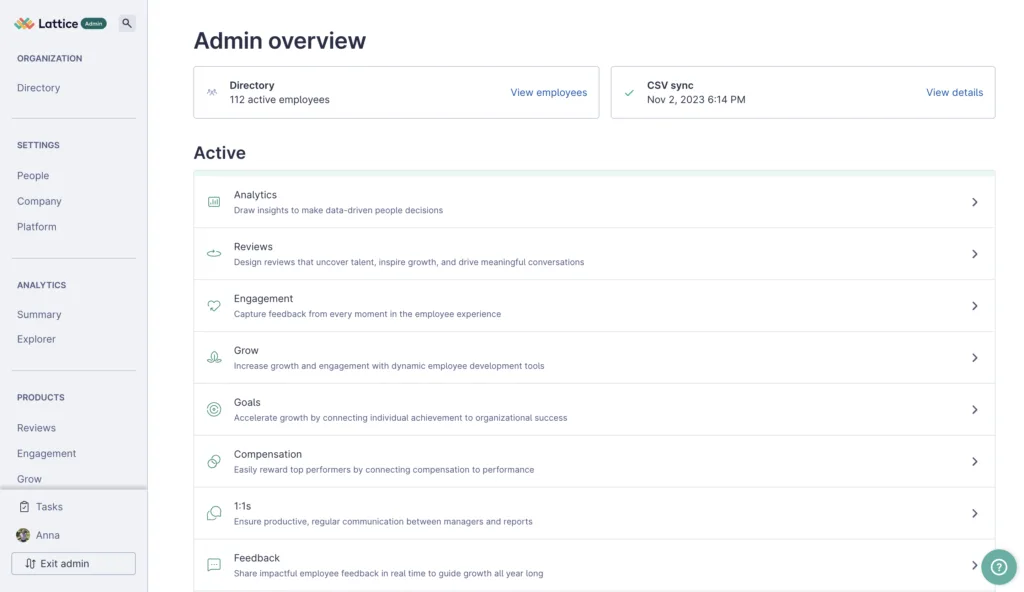
Lattice provides flexible tools for goal tracking, feedback, reviews, and development planning. The platform supports continuous performance practices and connects performance data with engagement insights.
Key Features:
- OKR Management: Tracks outcomes and progress in real time.
- Performance Reviews: Simplifies review cycles with customized workflows.
- Growth Plans: Links development steps with performance goals.
Best for: Growth-focused organizations that pair performance with development.
4. 15Five
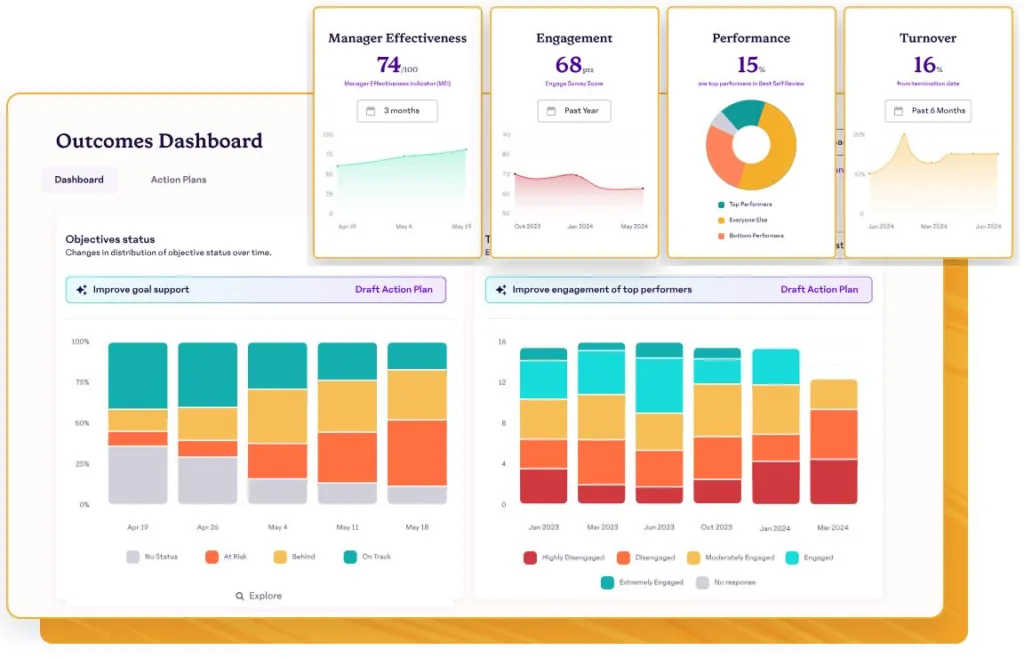
15Five combines performance reviews, goals, feedback, and engagement insights. The platform supports regular manager–employee conversations through check-ins and guided templates.
Key Features:
- Weekly Check-Ins: Helps managers stay informed about progress.
- Review Automation: Streamlines formal review cycles.
- Development Tools: Encourages skill-building conversations.
Best for: Organizations adopting continuous performance models.
5. BambooHR
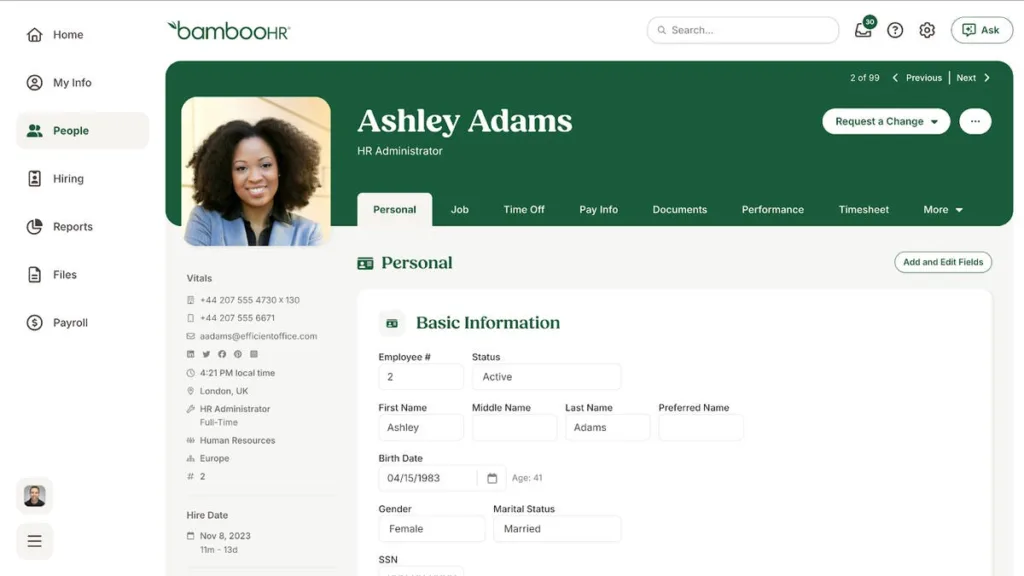
BambooHR’s performance tools provide simple goal tracking, evaluations, and manager–employee feedback. The platform fits organizations already using BambooHR’s core HR system.
Key Features:
- Regular Assessments: Helps managers measure progress through structured questions.
- Goal Tracking: Keeps objectives visible across the year.
- Employee Feedback: Supports two-way communication.
Best for: Small and mid-size organizations using BambooHR.
6. ClearCompany
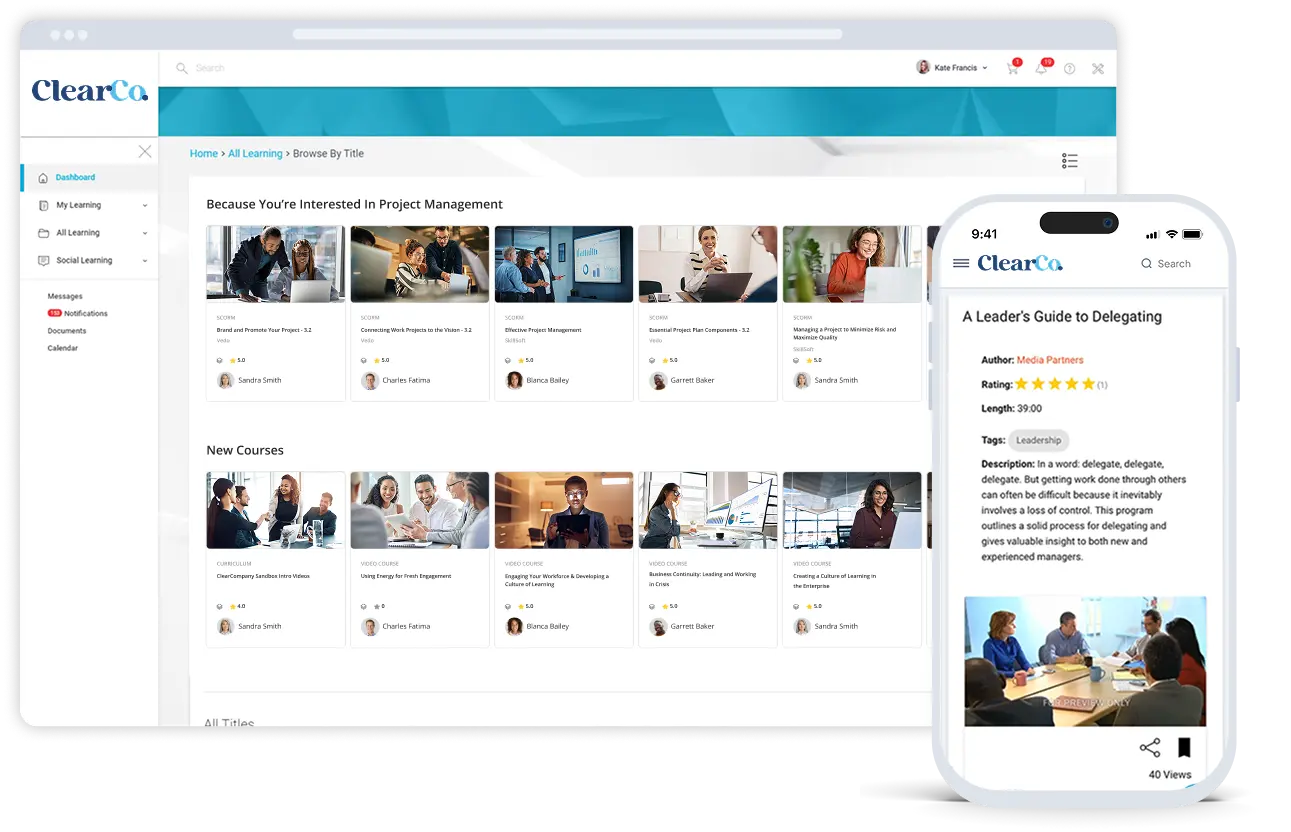
ClearCompany offers performance tools that integrate with its talent management suite. It supports goals, reviews, and competency assessments.
Key Features:
- Performance Reviews: Automates workflows to reduce HR workload.
- Competency Libraries: Helps teams evaluate role expectations.
- Goal Tracking: Aligns performance with organizational outcomes.
Best for: Organizations seeking an integrated talent suite.
7. Leapsome
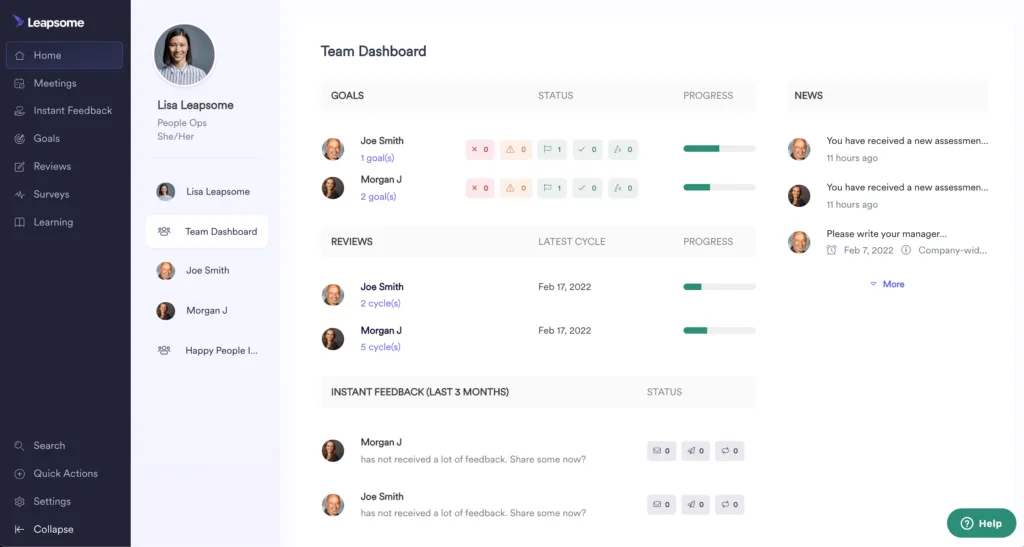
Leapsome connects performance reviews, OKRs, learning, and feedback in one platform. It supports continuous improvement and skill development.
Key Features:
- Review Cycles: Creates consistent review processes.
- Feedback and Praise: Encourages timely performance conversations.
- Skills Frameworks: Helps teams assess competencies.
Best for: Organizations connecting performance with learning.
8. Betterworks
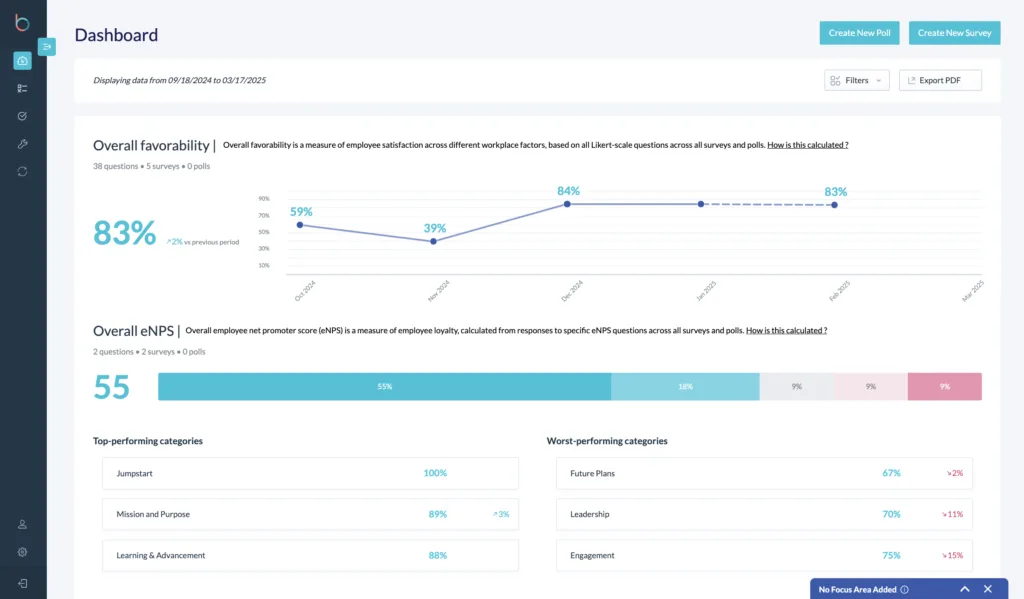
Betterworks focuses on OKR alignment and continuous performance practices. The platform provides tools for goals, feedback, and structured conversations.
Key Features:
- OKR Tracking: Aligns work across teams.
- Conversation Templates: Guides performance discussions.
- Cross-Functional Visibility: Supports collaboration across departments.
Best for: Teams using OKRs for performance alignment.
9. Trakstar
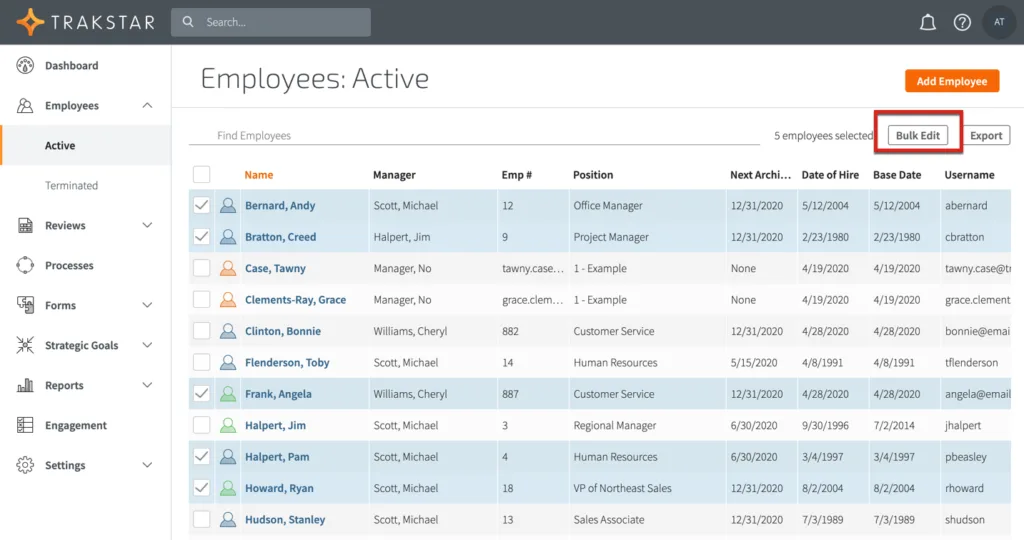
Trakstar centralizes goals, feedback, and review cycles. It provides customizable evaluations that fit different roles and teams.
Key Features:
- Flexible Review Forms: Adapts to organizational needs.
- Goal Tracking: Keeps performance targets visible.
- Feedback Tools: Encourages regular communication.
Best for: Organizations needing customizable review processes.
10. PerformYard
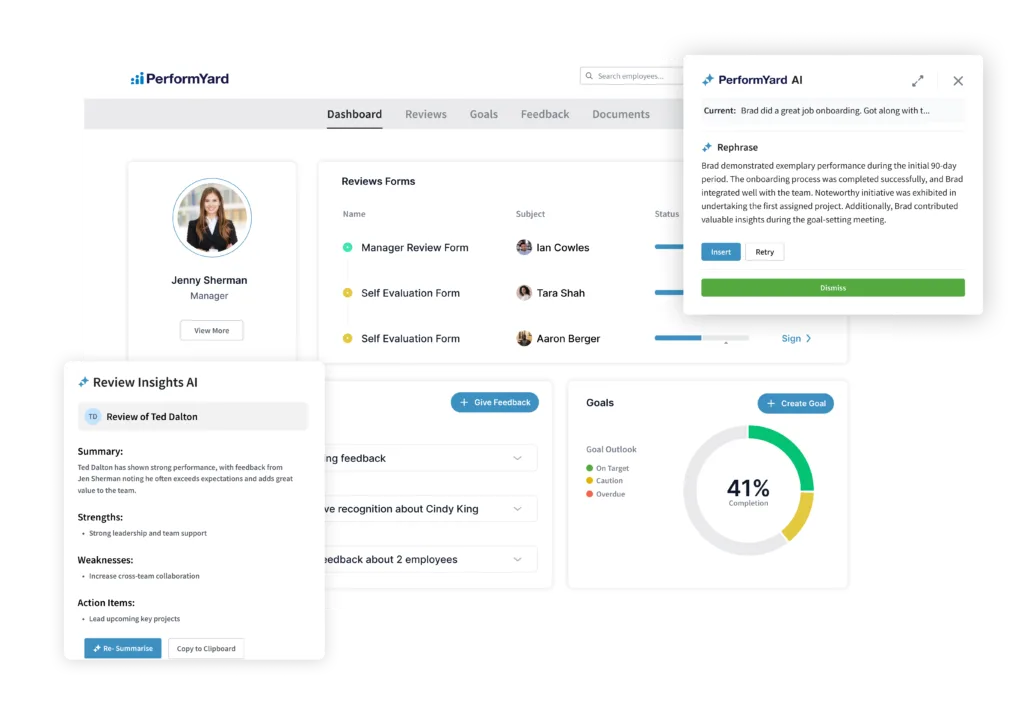
PerformYard is a focused performance platform with streamlined tools for goals, reviews, and feedback. It supports different performance models, including annual, project-based, and continuous.
Key Features:
- Customizable Workflows: Fits different performance philosophies.
- Goal Management: Tracks goals at individual and team levels.
- Centralized Records: Organizes performance data.
Best for: Organizations wanting flexibility with structured administration.
11. Culture Amp
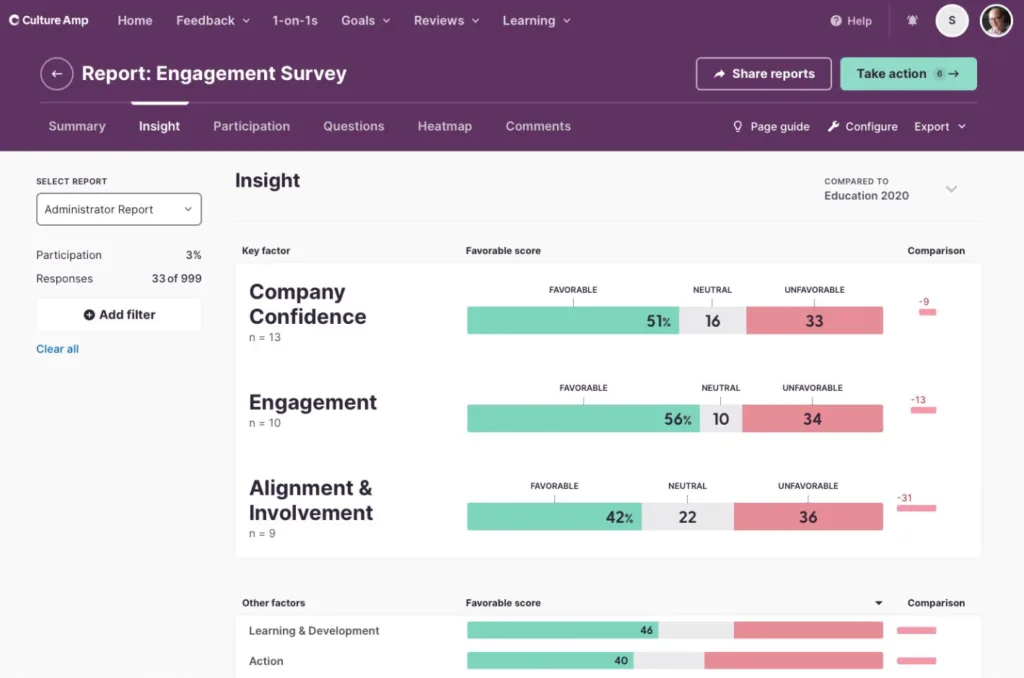
Culture Amp provides performance and engagement tools that help teams connect insights across employee experience.
Key Features:
- Review Tools: Structures manager–employee assessment cycles.
- Goals: Tracks priorities and alignment.
- Development Focus: Supports growth-centered conversations.
Best for: Organizations linking performance and engagement insights.
12. Synergita
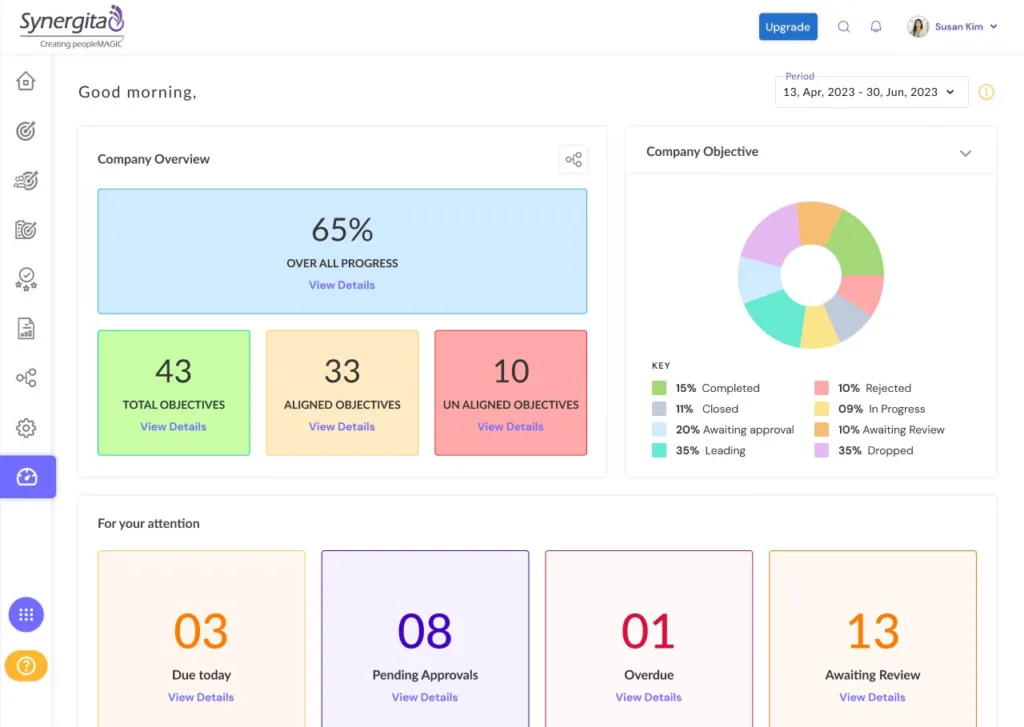
Synergita offers performance management with goal setting, feedback, and competency assessments. It supports continuous conversations and structured evaluations.
Key Features:
- Goal Management: Tracks outcomes and progress.
- Competency Models: Provides structured evaluation criteria.
- Automated Workflows: Reduces administrative work.
Best for: Organizations seeking a structured performance framework.
Benefits of Performance Management Software
Modern performance systems enhance alignment, strengthen development conversations, reduce administrative burden, and improve talent visibility to drive clearer, fairer, and more effective workforce performance.
Improved Goal Alignment
Performance systems help employees connect daily work with organizational priorities. When expectations are visible and updated regularly, teams stay focused on what matters most. Leaders gain clarity on progress, and employees feel supported as they work toward shared outcomes.
Stronger Development Conversations
Managers use performance data to guide productive career conversations. These discussions identify skill gaps, clarify expectations, and build development pathways. Structured insights also help HR and leaders provide more equitable opportunities.
Reduced Administrative Load
Automated workflows, templates, and reminders help HR teams reduce manual work. Managers save time during reviews and stay organized throughout the year. This creates space for better conversations with employees.
Better Talent Visibility
Analytics give leaders a clearer picture of performance trends. This helps organizations prepare successors, strengthen decision-making, and direct development investment where it matters.
Building a Performance-Focused Culture
Effective employee performance conversations require consistent development support. HR and talent leaders use systems like MentorcliQ to reinforce performance expectations with mentoring, coaching, and ERG support. These programs help employees build skills, connect with peers, and stay engaged in their careers. When paired with structured performance tools, they create a culture where people grow and stay aligned with organizational goals.
Book a Demo with MentorcliQ to learn how your organization can build stronger, scalable mentoring programs.
Modal