
Why You Should Consider a Pivot to a Skills-Based Organization
WHAT’S INSIDE
I want CliQ Updates!
How do you define a job role? Many will first focus on title or responsibilities, and factors like salary and benefits may also come into the mix. However, keeping roles strictly focused on these descriptors can be limiting, both for employees who have to work in these roles every day and for opportunities to grow.
So often, a chance to improve and learn something new comes with skills development, and this can’t take place if roles are completely fixed or if there is no time for employees to spread their wings and learn. In LinkedIn’s 2025 Workplace Learning Report, 88% of surveyed organizations expressed concern about employee retention, with learning opportunities identified as their leading retention strategy. But if these opportunities have no strategic priority, how can employees work on building their skills?
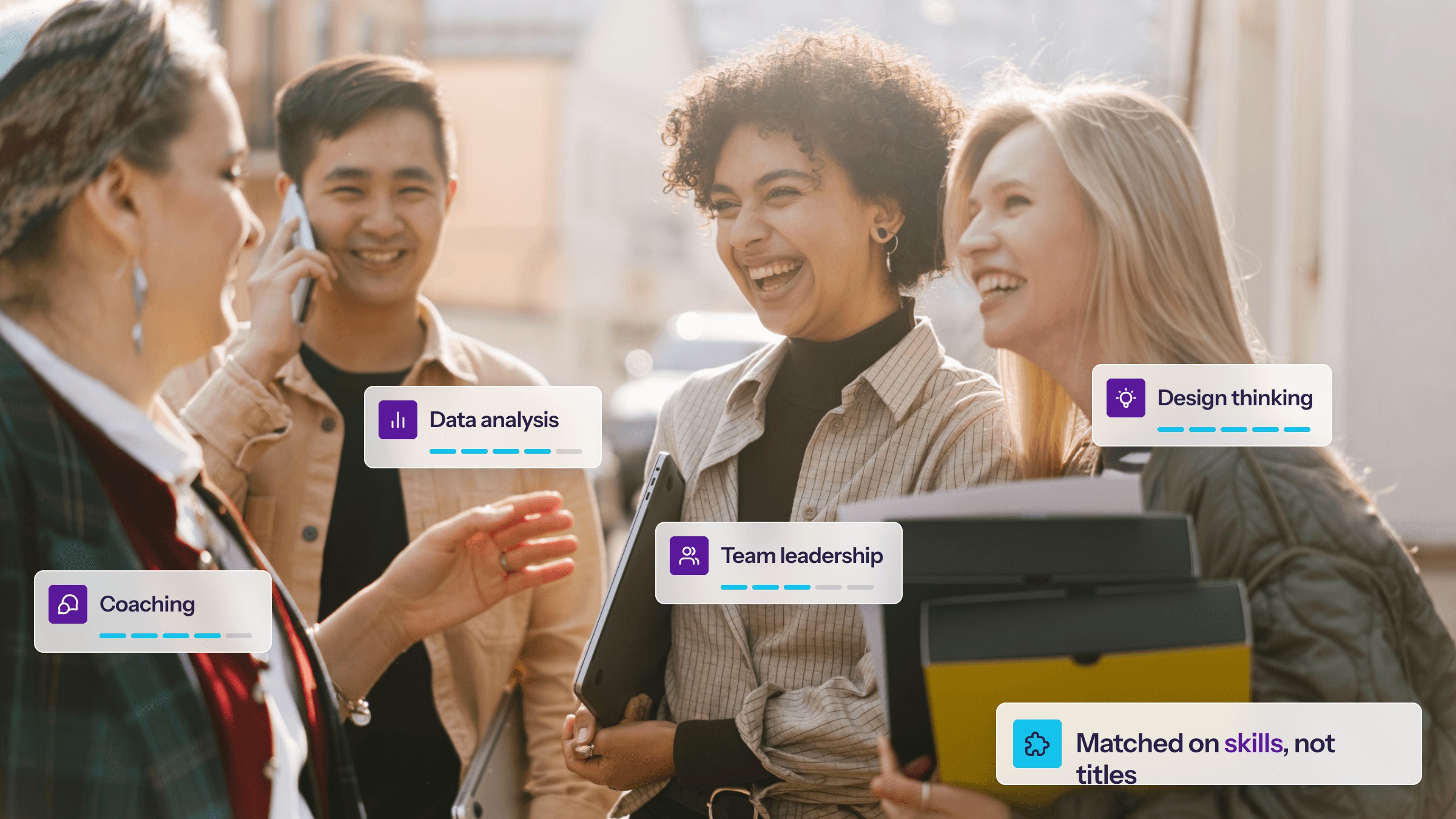
Let’s take a step back and think about jobs not as responsibilities or the title itself, but as a collection of skills. This skills-based approach is inherently more flexible and allows an employee to try things that would not normally necessarily fall in their wheelhouse. For an organization to pivot to a skills-forward way of thinking will be no quick or easy decision, but it can bring many benefits in the long run if a company does decide to pursue it.
What Is a Skills-Based Organization?
Skills and competencies are often listed on job descriptions and advertisements, so you might think that you already work in a company that values skills. While this may certainly be true, working for a business that values skills is not the same as working for one that prioritizes a skills-based organization framework:
| Role-Based Organization | Skills-Based Organization |
|---|---|
| Work organized around fixed job descriptions | Work allocated according to relevant skills and capabilities |
| Career progression often follows predefined ladders | Employees can pursue more varied career paths |
| Hiring emphasizes titles and previous roles | Hiring emphasizes demonstrated skills and potential |
| Development focuses on current job requirements | Development supports transferable and emerging skills |
| Talent tends to remain within departments | Talent can move across teams and projects |
Switching to a skills-based structure does not mean that we are eliminating job titles and roles, departments, or reporting lines. These are all needed for a functioning workplace. The key shift comes instead in how we manage people and work.
Why Are Organizations Switching to Skills-Based Structures?
Why is this shift occurring? As with many other changes in the world of business, it is being influenced by several different factors. You may even already recognize some of these at root within your own company, and leaning into them could give you more leverage during a shift to a more skills-based approach.
Responding to changing business needs
The world of business is evolving. The ways in which we interact with each other have changed massively across the past few years; new jobs are emerging for people to try, and the adoption of new tools and working practices is evolving our approach to certain tasks. A skills-based approach is needed during these changes, as it looks at the capabilities of existing talent, allowing leaders to place talent effectively and in line with their current skill sets.
Just look at the rollout and widespread adoption of AI tools. Employees may need to develop AI skills that weren’t previously required in their roles. However, they may need to upskill and learn more about how to put AI to good use in their current role in order to keep up with how the landscape is emerging.
Making better use of existing employees’ talent
Everyone is skilled, and the beauty of many workplaces is that people with different skills and backgrounds can all come together to collaborate. However, some organizations end up underutilizing and overlooking some of the talent available to them.
By taking stock of the skills available in your talent pool, you may discover people who can positively contribute to projects outside their usual teams or departments. There may be no need to search externally every time you think you have a skills gap; there might already be someone in your team with those capabilities.
Consider a marketing employee who has developed data analysis and automation skills beyond their formal responsibilities. In a traditional structure, those capabilities might remain unused. In a skills-based organization, the employee could support an analytics project, receive mentoring from a specialist, and potentially move into a more technical role.
Creating more opportunities for career growth
Career growth is often thought of as a ladder, with promotions helping us to climb the rungs. However, advancing up a promotion ladder doesn’t necessarily teach us new skills. We might develop the ones we have, but that doesn’t necessarily mean that we will be adding to those at our disposal.
By switching to a more skills-based progression, opportunities open up for lateral moves and new specializations. Cross-functional projects can bring together people who otherwise might never work together in a workplace, and that in turn creates growth and opportunities to grow. Employees also have the opportunity to pursue career development that better aligns with their strengths, interests, and personal goals, rather than the traditional route one might expect from their title.
Building a more adaptable workforce
A thriving organization will have employees who consistently learn, reskill, and apply their capabilities to the new challenges heading their way. With skills-based workforce planning, employees have the freedom to continuously learn and not just go on training courses when it is required of them.
Continuous learning such as this will in turn create a culture of learning where employees actively seek out opportunities to add to their knowledge. This promotes workforce flexibility and helps employees stay prepared for and able to cope with changing priorities.
What Does It Take to Become a Skills-Based Organization?
So, you think skills-based organization initiatives might fit with your overall business strategy? This isn’t a change you can make overnight, but it doesn’t need to be overly complicated or difficult. You may already be further towards it than you might realize.
Identify the skills your workforce already has
Start with what your employees can already do, and make sure you include the skills you may be overlooking. Employee skill assessments, self-reported skill inventories, manager feedback, and skills taxonomies can provide you with all the data you could need. Employees may have transferable skills earned from previous experience that their current job role doesn’t require them to use, but that doesn’t mean that this skill should be discounted.
Identify current and future skill gaps
With your new skills data, identify your current and future skills gaps. Connect your current workforce capabilities to the objectives built across your entire organization, and anticipate where demand is likely to grow.
Create opportunities to apply and develop skills
You know where demand and opportunity will lie, so create the space needed for employees to pursue it. This doesn’t need to be an immediate companywide rollout; it could be on a team-by-team basis, or even connected to individual projects. Even something as simple as job shadowing can create an opportunity for internal mobility and the chance to learn.
Establish continuous learning and development
Take advantage of training, cross-functional collaboration and projects, or coaching and mentoring. Give your employees the chance to pursue learning and development initiatives that best suit them, at a pace they like, and in a manner that fits their learning style.
How Mentoring Supports the Skills-Based Approach
Mentoring is a great channel for supporting a skills-based company, as it turns development from organizational ambition into real and tangible experiences and learning paths. While informal mentoring can be valuable, structured programs can make development opportunities more accessible and consistent across the organization. Good mentoring offers a workplace:
Help for employees in discovering skills and career interests
Mentors can help employees identify transferable skills and strengths they might not have considered before, whether these are technical skills learned on the job or something more in line with what we would consider to be soft skills. Have conversations with employees to recommend and outline developmental and career opportunities that they wish to explore.
Knowledge shared across departments
Mentoring and learning shared across teams opens doors that employees might otherwise not manage on their own. By learning about unfamiliar roles and functions on the other side of the business, they can pick up useful skills that benefit their career goals, even if they didn’t imagine they would benefit them initially. Don’t limit this to younger or more junior members either. Leadership can learn plenty by engaging with reverse mentoring, where they gain insights and skills from these younger coworkers.
Support internal mobility and career transitions
If employees decide to explore a new career path, a mentor can help them with this transition. A mentor may have already gone down the same route and could have valuable insights to pass on to help the employee hit the ground running. Skills-based hiring can bring in the new talent you need to fill your skills gaps, but don’t forget that the talent you need may be elsewhere in your workforce already.
Skills-Based Organizations Still Need Structure
As we mentioned earlier, it can be tempting to think that a skills-based organizational hierarchy will do away with titles and responsibilities. This isn’t the case; we are just pivoting the way we think about our tasks. Rather than ignore job descriptions in favor of lists of competencies, we need intentional workforce planning and support.
Good structure may be needed to navigate some of the challenges that naturally arise during this pivot. For example, manager buy-in may be needed to help ensure leaders know to share talent in their team. Talent retention can’t mean you keep a certain team member in your department simply because they are competent in particular in-demand skills; they should be allowed to go to other teams and try new things. Leaders also need to ensure there is fair access to opportunities. Assignments and mentoring shouldn’t depend entirely on who employees know or a manager’s recommendations. Several routes need to exist.
At the heart of it all needs to be clear ownership and accountability. If you were to launch mentoring in support of skills-sharing and job shadowing, a centralized mentoring platform can help to match the right people and give support to them to meet up, set goals, and actually share knowledge.
Build a Workforce Around What Your People Can Do
Organizations that actually understand their employees’ capabilities and wishes are better positioned to adapt, fill skills gaps, and create meaningful career opportunities. A pivot to a skills-based mindset should never happen overnight, but building it in gradually through mentoring and a culture of learning will give employees support where they as individuals need it. Rather than creating goals based on what you wish your people could do, gather the data and look at what they can achieve right now. It might be much more than you think.
If you are searching for a channel to support employee learning and exploration, consider what mentoring can offer your workers. With MentorcliQ’s skills intelligence solution, you can create these key relationships without adding unnecessary burden to your program administrators. Unlock the potential of your workforce’s skills. Book a demo today.
Modal