
The Career Ladder Is Changing. Are Your Mentoring Programs Keeping Up?

WHAT’S INSIDE
I want CliQ Updates!
For a long time, people pictured career growth as a ladder to climb. You started at a lower rung, built your experience, earned a promotion, and climbed to the next. The path might not have been easy, but it was relatively simple to picture: learn, perform, advance, and repeat.
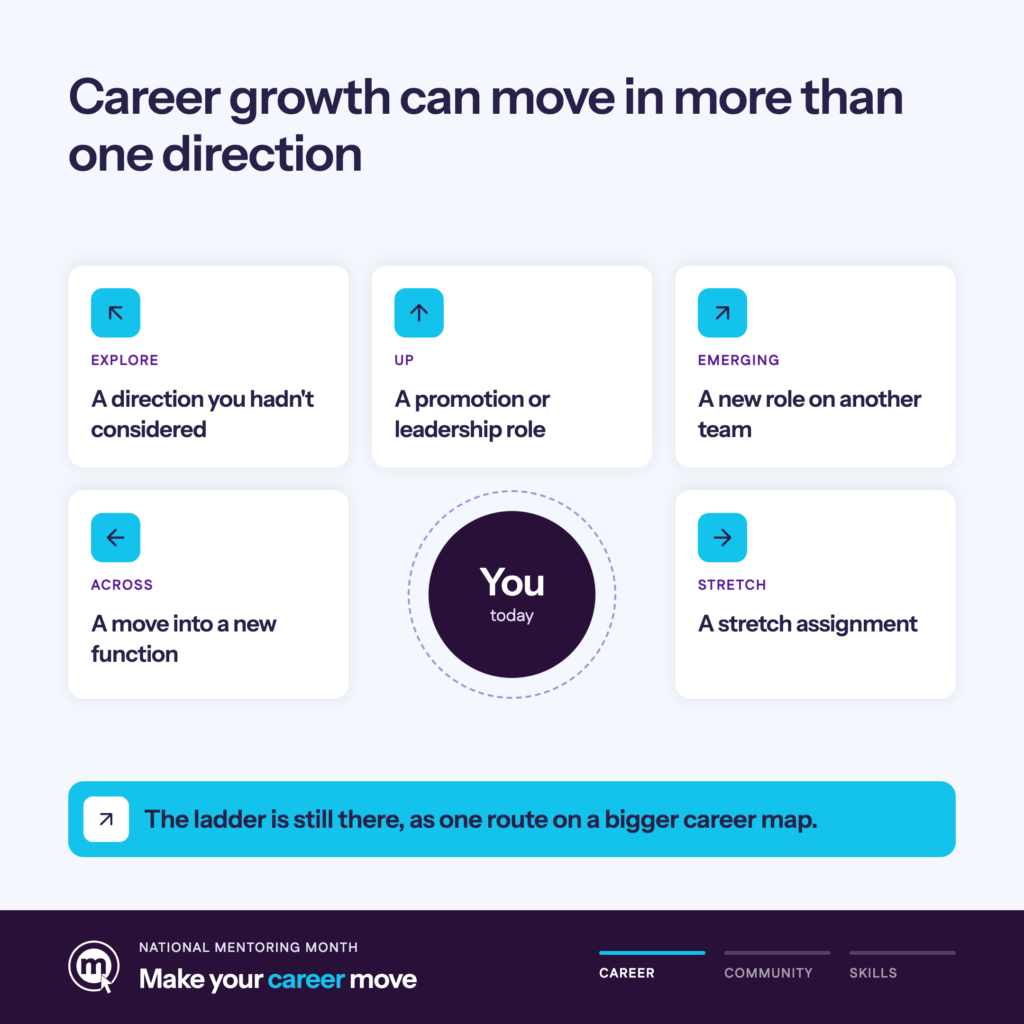
Today, that picture feels a little outdated. Careers can move sideways into a new function, through a stretch assignment, or toward an emerging role on another team. The next move isn’t always a promotion; it may be a direction someone hadn’t considered before.
For HR, L&D, and talent leaders, that shift raises a bigger question: Are mentoring programs still built for the careers employees used to have, or the ones they’re navigating now?
The Next Career Move Isn’t Always Up
Promotions and leadership pathways are still important, but they’re no longer the only ways employees think about career growth. Progress can also mean moving across the organization, building experience in a new area, or taking on work that opens up a different direction.
That shift mirrors what’s happening inside organizations, too. New roles are emerging, AI is changing how work gets done, new skills requirements are evolving, and teams are being reshaped around new priorities.
The World Economic Forum’s 2026 Chief People Officers’ Outlook highlights skills mismatches as a major workforce challenge and points to internal mobility and more agile talent models as part of the response. Among the Chief People Officers surveyed, 74% said reviewing organizational structure and job design was a priority, while 70% identified upskilling and reskilling programs as a priority. In other words, organizations can’t assume that the job someone is preparing for today will look the same tomorrow.
Career development has to reflect that. Growth might mean moving into another department, taking on a stretch assignment, building experience in a new area, or stepping into leadership. For someone else, it might mean deciding management isn’t the right move at all and pursuing a different path.
The career ladder still exists, but it’s just one route on a bigger career map.
Career Mobility Requires More Than a Clear Path
A career framework shows employees where they could go, but it doesn’t necessarily show how to get there. Gallup research found that 1 in 4 U.S. employees say they lack opportunities for promotion or career advancement in their current roles. Only 63% say their organization provides advancement or development opportunities. For many employees, the challenge is less about seeing available opportunities and more about understanding how to reach them.
Even when an organization has career paths, internal job boards, competency frameworks, training, career planning resources, and development opportunities, the next step may not feel obvious. Employees still need help making sense of their options, identifying the right path for them, and getting career advice and guidance from people with relevant experience. They may still be asking:
- What roles could fit my strengths?
- Could I move into another function?
- What experience would I need first?
- Who has made that move before?
- Would I actually enjoy that kind of work?
- Am I ready?
At this point, career development moves beyond showing employees what’s possible and starts helping them work out what comes next. Mentoring and coaching can help employees make sense of the opportunities in front of them and engage more actively with their own career development.
How the Right Mentoring Relationship Supports Career Growth
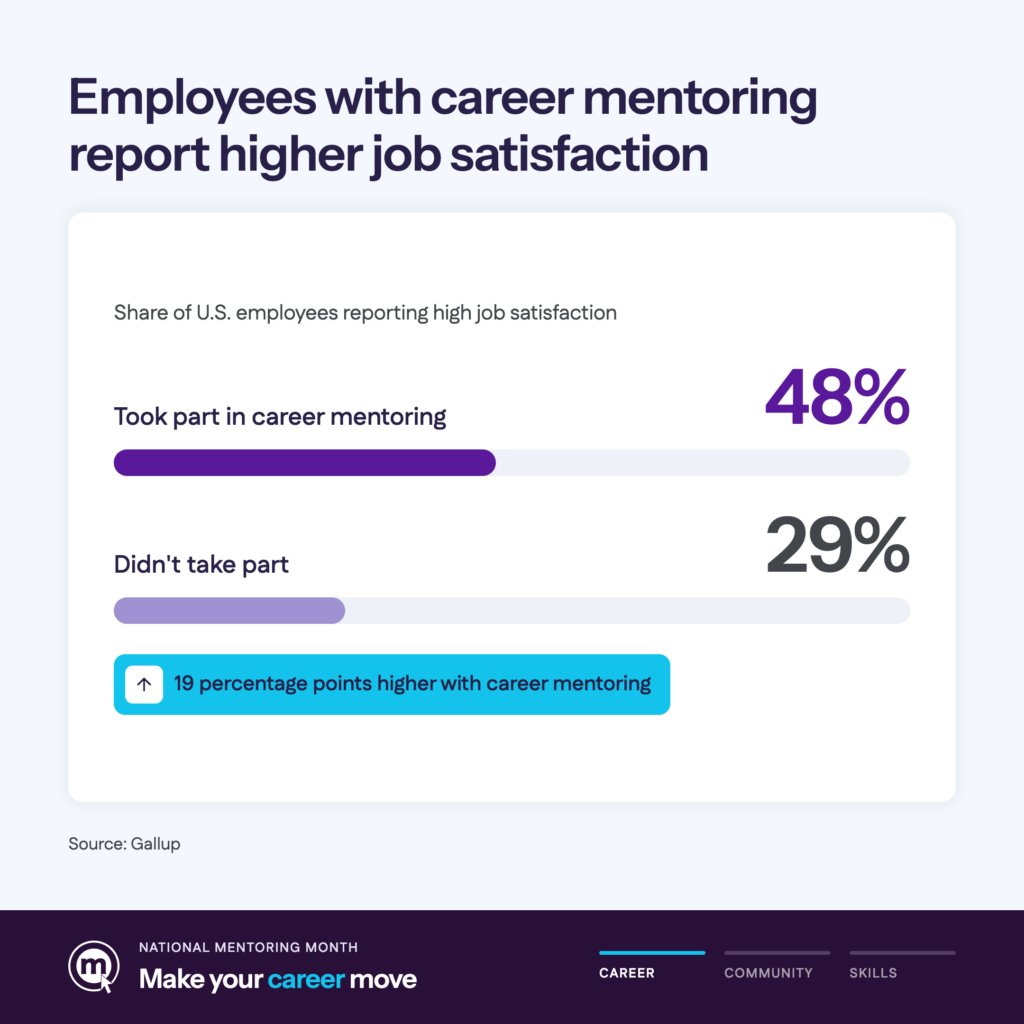
One of the most established approaches to supporting career advancement is mentoring. In fact, 48% of employees who participated in career mentoring reported high job satisfaction, versus 29% of those who hadn’t, according to Gallup. A mentor can help someone prepare for a promotion, develop leadership skills, or reach the next milestone in their career. In a non-linear career landscape, those goals still hold value.
That said, as career paths become more varied, formal mentoring programs need to support more than one type of career progression.
Match People for Where They Want to Go
Traditionally, mentoring matches lean heavily on where someone is today, considering their job level, department, location, or current role. In some programs, that approach makes sense. In others, that type of commitment can limit employees’ exposure to opportunities beyond their current path.
Sometimes, people want to branch out. Someone working in operations might be curious about product, while a technical employee may want to move into leadership. Someone in marketing may have strengths that could transfer into customer success, strategy, or another part of the business entirely.
Those career goals may look very different from one employee to the next. Career-focused mentoring should account for those possibilities. A more senior colleague on the same career path can be valuable, but someone exploring a different direction may benefit more from a mentor who can help them understand what that path could look like.
Connect Employees With People Outside Their Usual Circle
One of the main challenges with internal mobility is visibility. Employees usually know their own team, understand the roles around them, and have a good sense of the career paths closest to them. What’s often less clear is what opportunities exist elsewhere in the organization. Mentoring can help build awareness of roles, teams, and career paths employees may not encounter in their day-to-day work.
A mentor from another part of the business can explain what their work actually involves and share experience. Someone who has made a similar move can provide advice based on their own experience and explain what helped them make the transition. A leader from another department can offer a different perspective on an employee’s strengths and point them toward opportunities they might otherwise have missed.
These connections can also help employees access knowledge they may not encounter within their immediate team. Over time, those wider relationships can open doors to roles, projects, and opportunities employees may not have discovered otherwise.
The goal isn’t for every mentoring relationship to lead to a new role. Sometimes, the value lies in helping employees understand what else is possible and giving them a clearer view of where their career could go next.
Make Exploration Part of Career Development
Many employees won’t have a clear idea of where they want their career to go next. This is normal, but career development often assumes people already know their destination, the skills they need, and the steps required to get there. Real careers are rarely that tidy.
Lifelong learning plays an important role here, because career development doesn’t stop once someone reaches a particular role or level. People change direction. Priorities shift. Employees discover strengths they hadn’t recognized before, or realize that a role they once wanted no longer feels like the right fit. That uncertainty is part of career development, not a sign that something has gone wrong.
Mentoring gives employees space to work through that uncertainty before making a major move. Open communication and active listening within a mentoring relationship give employees access to relevant expertise, feedback, and perspective, which then helps them challenge assumptions, gain confidence, and think more clearly about what a potential path might involve.
That process is valuable even when it ends with, “I don’t think that role is right for me.” Career clarity is still progress, and often more useful than pursuing the wrong opportunity simply because it seemed like the obvious next step.
Leverage Mentoring to Support Internal Mobility
Sometimes, internal mobility is treated as more of a systems challenge than a people challenge. That can lead to a fairly standardized approach:
- Build the talent marketplace
- Create career paths
- Publish open roles
- Map employee skills
- Provide development plans
These steps are important, but systems can only take employees so far. A platform might show someone an opportunity exists, but it can’t always tell them whether the role is a good fit, what the move would involve, or whether their existing experience could translate into something new. That’s where a mentor can add valuable context and act as a sounding board.
Mentoring can help employees make sense of the opportunities in front of them, making it a natural part of a broader internal mobility strategy rather than a standalone employee benefit. Career frameworks can show possible directions, job boards may surface openings, and development programs help build capabilities. Mentoring, though, helps employees understand what those options could mean for them.
There’s also a strong case for helping employees see a future within the organization. WorldatWork’s 2026 State of Rewards found that career development was among the strongest predictors of whether employees intended to stay. Employees dissatisfied with career development were 1.9 times more likely to say they were extremely unlikely to remain with their employer.
Career development, then, isn’t only about helping people secure their next promotion. It also shapes whether employees can see a future for themselves within the organization.
5 Questions to Ask About Your Career Mentoring Strategy
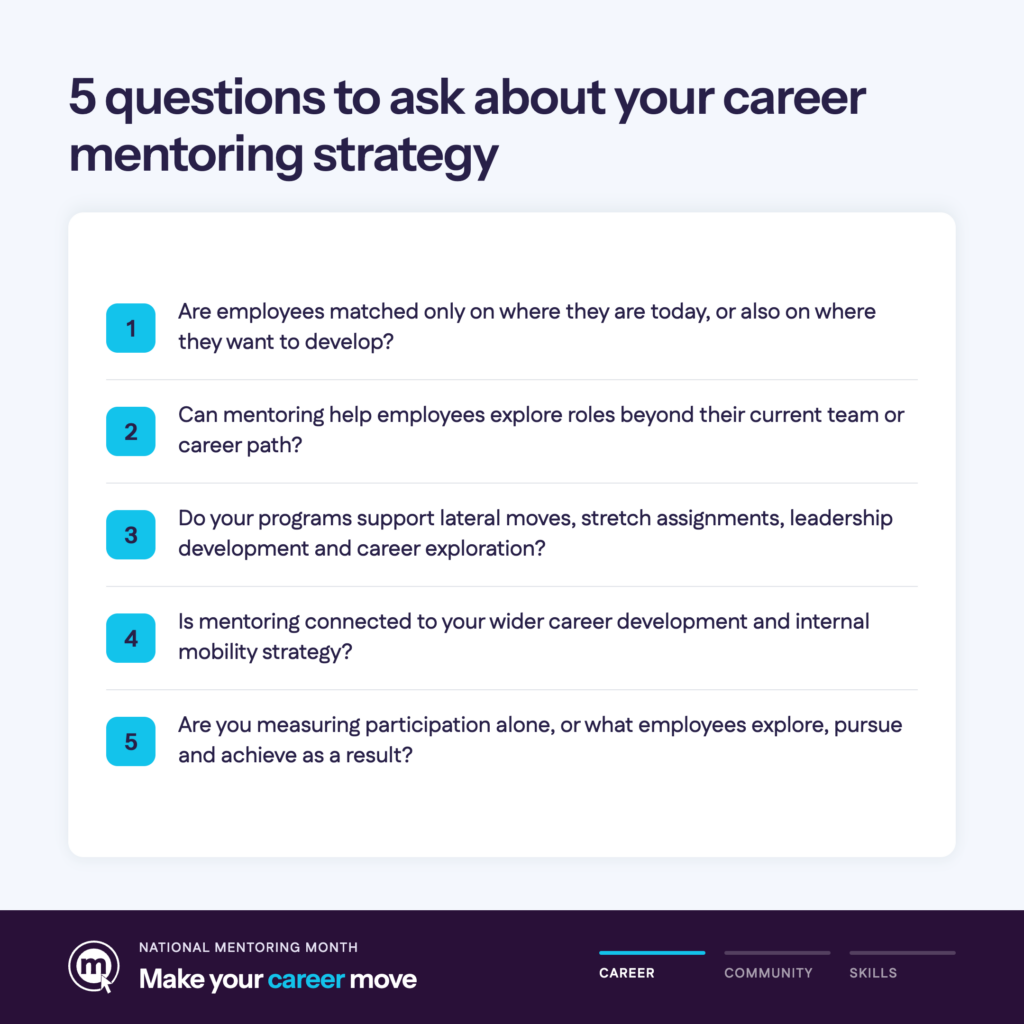
If career growth is becoming less linear, it’s worth reviewing whether your mentoring strategy still treats progression upward as the default. If so, consider these five questions:
- Are employees matched based only on where they are today, or also on where they want to develop?
- Can mentoring help employees explore roles and opportunities beyond their current team or career path?
- Do your mentorship programs support different forms of growth, from lateral moves and stretch assignments to leadership development and career exploration?
- Is mentoring connected to your wider career development and internal mobility strategy?
- Are you measuring participation alone, or what employees can explore, pursue, and achieve as a result?
Together, these questions can reveal whether mentoring is simply another development program or a practical way to help employees navigate what comes next.
Make Your Move That Suits You Best
The career ladder isn’t disappearing, but it no longer captures every form of career growth.
The next opportunity might be a promotion, but it could just as easily be a lateral move, a stretch assignment, a different type of role, or a direction an employee hadn’t considered before.
That changes what career development needs to provide. Employees need a clearer view of their options, space to explore them, and access to people who can offer the context and perspective a career framework alone can’t provide.
Modern mentoring programs can help make that possible. Rather than deciding where employees should go next, they can help employees understand what’s available, what could suit them, and what it might take to get there.
This National Mentoring Month, take a fresh look at what career growth means in your organization and whether your mentoring programs are helping employees make the moves that matter to them.
Ready to rethink what career mentoring could look like in your organization? Book a demo and see how MentorcliQ can help.
Modal